





Before you leave...
Take 20% off your first order
20% off
Enter the code below at checkout to get 20% off your first order

Discover summer reading lists for all ages & interests!
Find Your Next Read
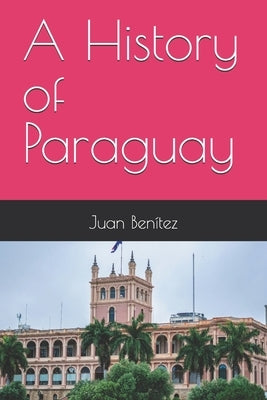
Nestled in the heart of South America, Paraguay's history is a compelling narrative of resilience, cultural fusion, and turbulent political evolution. This history traces the nation's journey from the pre-Columbian lands of the Guaraní people to the modern day. It explores the unique colonial experience that followed the founding of Asunción in 1537, a period defined by the absence of precious metals, which fostered an unprecedented mixing of Spanish settlers and indigenous Guaraní. This fusion created a distinctly mestizo society and cemented the Guaraní language's status as a pillar of national identity, a unique phenomenon in the Americas. The book also delves into the remarkable and controversial Jesuit Reductions, theocratic missions that flourished for over 150 years as a "state within a state."
The 19th century forged Paraguay through fire and iron will. Following a relatively bloodless independence in 1811, the nation fell under the absolute rule of Dr. José Gaspar Rodríguez de Francia, "El Supremo," who sealed the country from the outside world in a radical experiment of isolation and self-sufficiency. His successors, Carlos Antonio López and his son Francisco Solano López, opened the nation to modernization before plunging it into the catastrophic War of the Triple Alliance (1864-1870). This devastating conflict against Brazil, Argentina, and Uruguay resulted in an almost unimaginable demographic collapse, leaving the nation in ruins and shaping its collective memory for generations to come.
The subsequent decades were a painful struggle for reconstruction and survival. The late 19th and early 20th centuries saw the sale of vast tracts of land to foreign interests, creating a new export economy based on yerba mate and quebracho tannin, often built on the brutal exploitation of labor. Political instability was rampant until another bloody conflict, the Chaco War with Bolivia (1932-1935), redefined national pride and brought the military to the forefront of politics. This turmoil culminated in the rise of General Alfredo Stroessner, who seized power in 1954 and established one of Latin America's longest and most repressive dictatorships. For thirty-five years, the "Stronato" brought stability and economic development, including the monumental Itaipú Dam project, at the cost of widespread human rights abuses and endemic corruption.
The fall of Stroessner in 1989 ushered in a new and challenging democratic era. This history navigates the country's difficult transition, marked by the drafting of a new constitution in 1992, but also by persistent political instability, dramatic crises like the "Marzo Paraguayo" of 1999, and the enduring challenges of institutional weakness and corruption. It examines the profound transformation of the countryside by a booming soy industry, which generated immense wealth alongside deep social conflicts and environmental crises. The narrative continues into the 21st century, covering the historic 2008 election that broke the Colorado Party's sixty-year grip on power, the dramatic impeachment of President Fernando Lugo, and the nation's contemporary struggles with growth, inequality, and its complex regional relationships in a rapidly changing world.
Thanks for subscribing!
This email has been registered!
Take 20% off your first order
Enter the code below at checkout to get 20% off your first order