





Before you leave...
Take 20% off your first order
20% off
Enter the code below at checkout to get 20% off your first order

Discover summer reading lists for all ages & interests!
Find Your Next Read
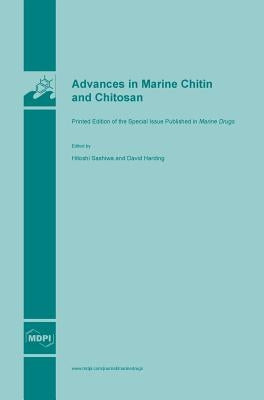
Recently, biomass-based polymers from renewable resources have received increasing focus
owing to the depletion of petroleum resources. Natural polysaccharides such as cellulose,
hemicellulose, and starch are among the candidates from natural resources for biomass
polysaccharide products including bioplastics. Although several kinds of neutral or anionic
polysaccharides such as chitin, alginic acid, hyaluronic acid, heparin, and chondroitin sulfate
exist in nature, natural cationic polysaccharides are quite limited. Chitin is second only to
cellulose as the most natural abundant polysaccharide in the world. Chitosan, the product
from the N-deacetylatation of chitin, appears to be the only natural cationic polysaccharide.
Therefore, chitin and chitosan due to their unique properties are expected to continue to offer
a vast number of possible applications for not only chemical or industrial use, but also
biomedicine. The research history on chitins, one of the most major and abundant natural
polysaccharides on earth, started around 1970. Since the 1980s, chitin and chitosan research
(including D-glucosamine, N-acetyl-D-glucosamine, and their oligomers) has progressed
significantly over several stages in both fundamental research and industrial fields.
Author: Hitoshi Sashiwa
ISBN-10: 3038421308
ISBN-13: 9783038421306
Publisher: Mdpi AG
Language: English
Published: 12/31/2015
Pages: 484
Format: Hardcover
Weight: 2.73lbs
Size: 9.61h x 6.69w x 1.44d
Thanks for subscribing!
This email has been registered!
Take 20% off your first order
Enter the code below at checkout to get 20% off your first order