




Before you leave...
Take 20% off your first order
20% off
Enter the code below at checkout to get 20% off your first order

Discover summer reading lists for all ages & interests!
Find Your Next Read
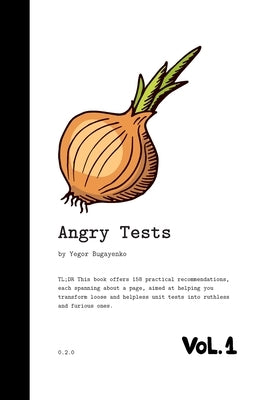
Unit testing is a practice most programmers are familiar with. Many books present it as straightforward and unquestionably beneficial. Yet the experience of practicing it in real projects is often different. After some time, tests begin to feel like a burden. They become flaky, failing intermittently for no obvious reason. They grow difficult to read and maintain. And, perhaps most discouraging, they are tedious to write. If this has been your experience, you are not alone. It has been mine as well, and the same has been true for the teams I have worked with.
This book presents a set of practical techniques we use to deal with the complexity, fragility, and general messiness of unit tests. I cannot claim that we have solved every problem. What I can say is that the tests we write today are far more reliable and useful than the ones we were writing five years ago. There is no single recipe for success, but when a collection of sound practices is applied consistently, tests begin to serve their intended purpose.
The focus of this book is practical rather than theoretical. Each short section introduces a specific practice and demonstrates it with examples in Java, C++, Go, Python, Ruby, or JavaScript. Along the way, the book references more than a hundred open-source libraries that help automate testing. It also reviews several dozen books on automated testing, examining which of their recommendations hold up in practice and which do not.
If you are a hands-on programmer who feels frustrated with the way tests are commonly written today, this book may be useful to you. Happy testing.
Thanks for subscribing!
This email has been registered!
Take 20% off your first order
Enter the code below at checkout to get 20% off your first order