



Before you leave...
Take 20% off your first order
20% off
Enter the code below at checkout to get 20% off your first order

Discover summer reading lists for all ages & interests!
Find Your Next Read
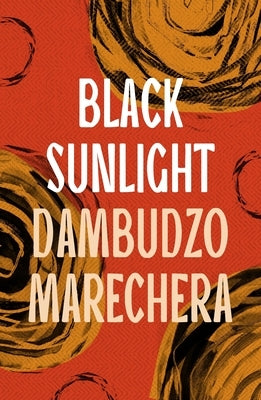
In this dark and deeply radical novel, Dambudzo Marechera offers a visceral account of a photojournalist's entanglement with a terrorist organisation.
In an unnamed totalitarian state, the members of Black Sunlight - a group of violent anarchists - are the only ones fighting for change and justice. As their actions push the country further towards chaos, journalist Christian records it all through the lens of his camera. Christian's life so far has been one of immense struggle and alienation. So when he becomes tangled in the Black Sunlight uprising, he is determined to remain a bystander and nothing more; to capture their actions without praise or condemnation. In evocative flashes of sex, violence, war, and myth, Christian's story explodes in a labyrinthine plot, told through a chaotic stream-of-consciousness that mirrors the nation's crumbling climate. Black Sunlight is a piercing insight into the darkness of the human psyche and a raw examination of a nation in battle against itself - where everything political turns deeply personal. 'Complex, challenging - and uniquely potent.' GuardianDambudzo Marechera was born in 1952 in Rusape, Rhodesia (modern-day Zimbabwe) and was a short story writer, playwright, and poet. Known for his eccentric personality and pioneering fiction, Marechera was awarded a scholarship to Oxford University but was shortly expelled. Three years later, Marechera won the 1979 Guardian Prize for First Fiction for his novel, The House of Hunger. Leeds University and the University of Sheffield later offered him positions as a Writer in Residence.
Marechera went on to publish Black Sunlight in 1980 and wrote a collection of plays, prose narratives, and poems but lived in frequent poverty during his time in England, suffering through various health issues. On his return to Zimbabwe in 1982, Marechera fell further into ill health and homelessness, dying only five years later at the age of 35. His work continued to influence a generation of writers, inspiring a movement of social criticism that focused on independent Zimbabwe.Thanks for subscribing!
This email has been registered!
Take 20% off your first order
Enter the code below at checkout to get 20% off your first order