





Before you leave...
Take 20% off your first order
20% off
Enter the code below at checkout to get 20% off your first order

Discover summer reading lists for all ages & interests!
Find Your Next Read
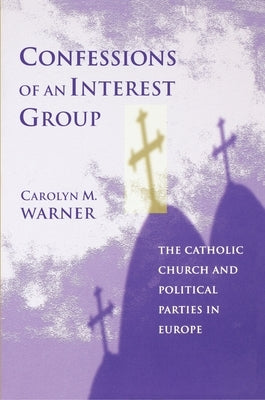
Following World War II, the Catholic Church in Europe faced the challenge of establishing political influence with newly emerging democratic governments. The Church became, as Carolyn Warner pointedly argues, an interest group like any other, seeking to attain and solidify its influence by forming alliances with political parties. The author analyzes the Church's differing strategies in Italy, France, and Germany using microeconomic theories of the firm and historical institutionalism. She demonstrates how only a strategic perspective can explain the choice and longevity of the alliances in each case. In so doing, the author challenges earlier work that ignores the costs to interest groups and parties of sustaining or breaking their reciprocal links.
Thanks for subscribing!
This email has been registered!
Take 20% off your first order
Enter the code below at checkout to get 20% off your first order