





Before you leave...
Take 20% off your first order
20% off
Enter the code below at checkout to get 20% off your first order

Discover summer reading lists for all ages & interests!
Find Your Next Read
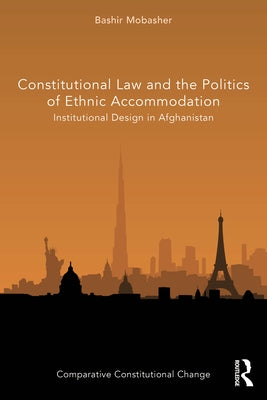
This book explores whether the legal and political institutions of Afghanistan were able to incorporate diverse ethnic groups into the political process. Ethnic accommodation has gained central stage in the literature on institutional design and democratic consolidation.
However, some divided societies are more explored than others, and Afghanistan is one understudied country that is critically important for testing and improving our theories of institutional design in a democratizing, plural society. This work examines the Constitution of 2004 and those provisions of electoral laws and political party laws that together devised Afghan political institutions including those of the presidential system, unitary government, electoral systems as well as the party system.
It argues that due to their incongruence in design and effects, the Afghan political institutions failed to fully accommodate ethnic groups in the political process. This book adopts a holistic approach, while also paying careful attention to the details of each of the individual pieces of political institutions designed by the Constitution of 2004. Taken together, this approach yields insights into the boundaries and interactions of institutional design and how their interactions hinder or advance ethnic accommodation in varying contexts.
The book will be essential reading for academics, researchers and policy makers interested in constitutional law and politics.
Dr. Bashir Mobasher is a postdoctoral fellow at the American University's Department of Sociology and a lecturer of political science at the American University of Afghanistan (AUAF).
Thanks for subscribing!
This email has been registered!
Take 20% off your first order
Enter the code below at checkout to get 20% off your first order