





Before you leave...
Take 20% off your first order
20% off
Enter the code below at checkout to get 20% off your first order

Discover summer reading lists for all ages & interests!
Find Your Next Read
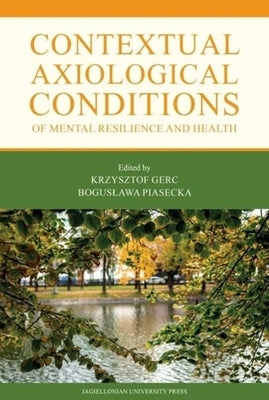
Resilience is founded primarily on positive psychology and health psychology, but the theoretical construct, which is analysed, is also present in interdisciplinary research perspectives: medicine, pedagogy and sociology.
The authors of this monograph pay attention to the aspect of the relationship of the individual with their social context. Hence, being in a relationship, exchanging information with the social environment becomes the constitutive value of a person (...). The monograph contains the observation, appearing indirectly in almost every chapter, that when undertaking any actions aimed at developing human mental resilience, it should be checked whether the undertaken interactions do not interfere with the natural resitance. Therefore, it is assumed that the activity focused on lasting support for the development of the individual should be carried out when there is a relatively high plasticity in shaping the individual. In addition, such activities should be adapted to the capabilities of people being at a certain stage of development and take into account cultural conditions. The factors affecting the increase in mental resilience are recognized in many aspects, and their source can be both the family and the wider social environment (...). The metaphor in which the accumulation of life experiences by a human being is compared to the act of packing luggage before a long and difficult to plan and predict journey is well known. All negative, painful life experiences constitute the overwhelming weight of metaphorical luggage; while positive experiences are meant to make this load lighter, and the travel - safer and more predictable. The presented metaphor indirectly describes the basic motive of the monograph, illustrating how the greatest simplification can characterize the formation of self-esteem and resilience in man, identifying them with the synergistic effect of experience (including primarily the impact of family and social environment) and biologically conditioned features. By experiencing positive relationships, the child develops those social skills that are necessary for safe functioning in a social group, negotiating by them the requirements of the environment and effective implementation of the challenges that the environment and the circumstances of future life will bring.Krzysztof Gerc, Ph.D., Assistant Professor at the Developmental and Health Psychology Department, Institute of Applied Psychology, Jagiellonian University in Krak, Poland.
His scientific interests and publications refer to: mental development of disabled people in their lifespan and the issues of supporting the development of child and young people who show developmental deficits. He deals also with the issues of culture of organization, its effect and meaning in the process of management in education and health care in the wider context of rehabilitation and educational psychology. Boguslawa Piasecka Ph.D., Assistant Professor at the Developmental and Health Psychology Department, Institute of Applied Psychology, Jagiellonian University in Krak, Poland. She is a certified psychotherapist of Polish Psychological Association. She works in Psychiatry Clinical Department for Adults, Children, and Youth in The University Hospital in Krakow. She leads couples and family psychotherapy and trainings in systemic family therapy. She conducts research in the organization of supporting families.Thanks for subscribing!
This email has been registered!
Take 20% off your first order
Enter the code below at checkout to get 20% off your first order