





Before you leave...
Take 20% off your first order
20% off
Enter the code below at checkout to get 20% off your first order

Discover summer reading lists for all ages & interests!
Find Your Next Read
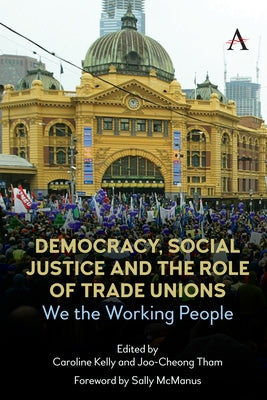
Trade unions are central to Australian social, economic and political life. They are the largest voluntary organisations in the country, are a significant presence in political life, and, as workplace organisations, are often the only effective vehicle to give voice to working people. Their role is nevertheless under serious challenge, with low and declining union density and shrinking coverage of collective bargaining. Controversies surrounding several union officials have called into the question the legitimacy of trade unions. And for some governments, trade unions are not social partners but rather targets of restrictive legislation.
Despite these tensions, there has yet to be a broad and systematic scholarly engagement with the challenge to the centrality of trade unions in Australian social, economic and political life. Existing literature tends either to examine trade unionism from an historical perspective or to focus upon the regulation of the role of unions in the workplace.
This book aims to fill this gap by bringing together leading scholars in industrial relations, law, political science and political philosophy to critically assess the role of Australian trade unions. In doing so, it is organised according to two themes. First, the book examines the democratic role of trade unions as representatives of working people and addresses issues such as economic democracy and the rule of law in the workplace, political funding and trade agreements. Second, the book examines the social justice role of trade unions in providing a countervailing force to employer power including in relation to precarious work, the 'gig' economy, labour migration and the pressing global challenge of climate change. The concluding contribution weaves these two themes of democracy and social justice together in proposing a democratic socialist vision of trade unions and labour law.
Joo-Cheong Tham is a professor at Melbourne Law School and director of the Electoral Regulation Research Network. His research areas are labour law and public law, with a focus on law and democracy and precarious work.
Caroline Kelly is a PhD candidate at the Melbourne Law School. Her research areas are labour law and public law, with a focus on the influence of administrative law doctrines in Australian labour law.
Thanks for subscribing!
This email has been registered!
Take 20% off your first order
Enter the code below at checkout to get 20% off your first order