





Before you leave...
Take 20% off your first order
20% off
Enter the code below at checkout to get 20% off your first order

Discover summer reading lists for all ages & interests!
Find Your Next Read
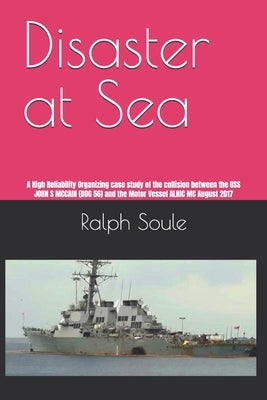
In the darkness on 21 August 2017, the guided missile destroyer USS JOHN S MCCAIN (DDG 56) turned into and collided with the bow of Motor Vessel ALNIC MC in the Straits of Singapore. Ten U.S. Navy sailors were killed, 48 more were injured, and the destroyer suffered more than $100M in damage. A collision at sea can happen despite practices designed to prevent them.
This book's unique contribution is an analysis of the collision without hindsight bias, participant mind reading, vagueness, and folk models of causality. It identifies specific practices that readers can take to improve safety in any organization at any level. The author is a 30-year veteran of the U.S. Navy with a deep understanding of High Reliability Organizing (HRO) theory. Post-accident investigations focus on blame. The focus of this book is on learning how to be more reliable.
The author's experience with HRO is deep. He has improved the HRO performance of junior and experienced personnel. He has helped rebuild HRO practices at organizations where they've gone horribly wrong. He is an expert on the new ways of thinking essential for HRO, which practices are hard to do well, and how the practices work together as a system for improving reliability.
The crew of the USS JOHN S MCCAIN (DDG 56) "was unprepared for the situation in which they found themselves" according to Navy investigators. A veteran of high reliability audits and corrective action plans, the author deconstructs the practices of the crew that put them in that situation.
There is extensive academic research on HRO and much of it is very useful. However, brief visits to organizations practicing HRO at high levels followed by descriptions in scholarly journals and books have limitations. Observing HRO is not the same as doing it, identifying and correcting its problems in real-time, and rebuilding reliability when it breaks down. Unless you have seen "HRO gone wrong" like the author, you don't understand it. After reading this book, you will.
Thanks for subscribing!
This email has been registered!
Take 20% off your first order
Enter the code below at checkout to get 20% off your first order