



Before you leave...
Take 20% off your first order
20% off
Enter the code below at checkout to get 20% off your first order

Discover summer reading lists for all ages & interests!
Find Your Next Read
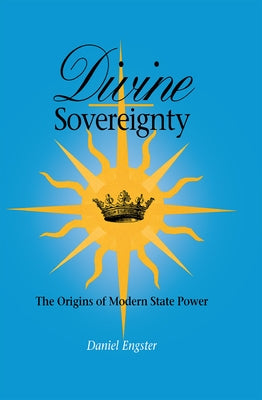
How did the modern state become the Leviathan that Hobbes described? Engster challenges the common assertion that the state emerged from a new secular philosophy at the time of the Renaissance. He argues instead that early modern theorists legitimized state power by portraying it as a sanctified force for moral order within an otherwise secular and contingent world.
Engster traces the modern development of state authority to the breakdown of medieval ideas of order encompassed in the "great chain of being." He then shows how sixteenth- and seventeenth-century writers and statesmen such as Montaigne, Bodin, Richelieu, Bossuet, and Hobbes redefined the main principles of the state--including legislative sovereignty, executive prerogative, governmental regulation, and bureaucratic rationality--in ways that underlie state organization even today.
Providing a broad synthesis of early modern state theory and practice, Divine Sovereignty suggests that these writers envisioned the state as the center of divine and natural order in a world that had strayed from divine guidance. In revealing how early modern theorists and statesmen justified the new powers of their Leviathan, Engster also illuminates conflicts and paradoxes within the modern nation-state.
Daniel Engster is Assistant Professor of Political Science at the University of Texas, San Antonio.
Thanks for subscribing!
This email has been registered!
Take 20% off your first order
Enter the code below at checkout to get 20% off your first order