





Before you leave...
Take 20% off your first order
20% off
Enter the code below at checkout to get 20% off your first order

Discover summer reading lists for all ages & interests!
Find Your Next Read
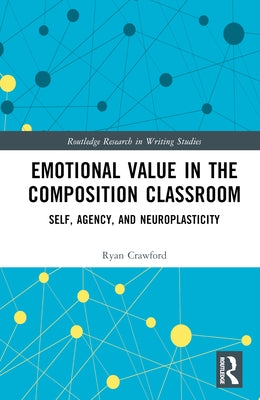
Using the concept of "plasticity," or the brain's ability to change through growth and reorganization, as a theoretical framework, this book argues that encouraging an exploration of the self better establishes emotional value in the composition classroom.
This book explores recent evidence from studies in modern neuroscience to provide biological correlations between current and developing theory and pedagogy in Composition Studies. Starting with the concept of self, each subsequent chapter builds a neurobiological understanding of how emotional value, intrinsic motivation, creativity, and happiness are constructed and felt. This material exploration shows how these factors can maintain motivation, improve long-term memory, encourage creative risk, and initiate complex considerations of being. Recognizing the shift in Composition Studies to posthuman and new materialist methodologies, this modern neuroscience is presented as a useful parallel to-rather than being at odds with-these and other current methodologies, theories, and pedagogies.
Outlining the need for a more student-focused, guided-discovery framework for the composition classroom, this interdisciplinary resource will be of interest to scholars and students in the field of Composition Studies, Communication Studies, Education, Psychology, and Philosophy.
Ryan Crawford is a lecturer in the English Department and Director of First-Year Writing at the University of New Haven, USA.
Thanks for subscribing!
This email has been registered!
Take 20% off your first order
Enter the code below at checkout to get 20% off your first order