





Before you leave...
Take 20% off your first order
20% off
Enter the code below at checkout to get 20% off your first order

Discover summer reading lists for all ages & interests!
Find Your Next Read
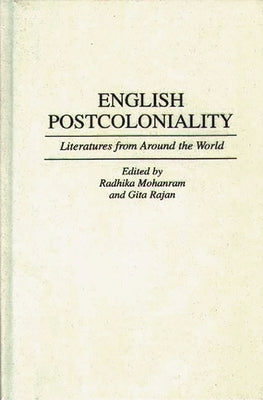
As the British empire expanded throughout the world, the English language played an important role in power relations between Britain and its colonies. English was used as a colonizing agent to suppress the indigenous cultures of various peoples and to make them subject to British rule. With the end of World War II, many countries became gradually decolonized, and their indigenous cultures experienced a renaissance. Colonial mores and power systems clashed and combined with indigenous traditions to create postcolonial texts.
This volume treats postcoloniality as a process of cultural and linguistic interplay, in which British culture initially suppressed indigenous cultures and later combined with them after the decline of the British empire. The first section of this book provides an introductory overview of English postcoloniality. This section is followed by chapters discussing postcoloniality and literature from an historical perspective in particular countries around the world. The third section gives special attention to the literature and culture of indigenous peoples. A selected bibliography concludes the work.RADHIKA MOHANRAM is Lecturer in the Department of Women's Studies at the University of Waikato in Hamilton, New Zealand, where she teaches gender and postcolonial theory. She has published widely on postcolonial theory and literature and is currently finishing a book on Edith Wharton and Diasporic subjectivity.
GITA RAJAN teaches Victorian literature and postcolonial discourse at Fairfield University./e She was an Andrew Mellon Fellow in Humanities at the University of Pennsylvania and had a fellowship from Yale Center for British Art.Thanks for subscribing!
This email has been registered!
Take 20% off your first order
Enter the code below at checkout to get 20% off your first order