





Before you leave...
Take 20% off your first order
20% off
Enter the code below at checkout to get 20% off your first order

Discover summer reading lists for all ages & interests!
Find Your Next Read
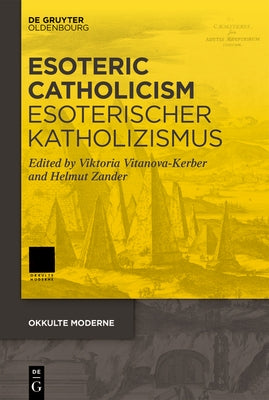
Catholicism and esotericism seem to have hostile relations but in fact the opposite is true. In both traditions, we find stigmata, revelations, visions, "magic", spiritualistic contacts...
We explore which are the theological and sociological concepts which make this possible. The porous transfer zone between "orthodox" theology and "heretical" ideas is central. For example, the legitimating structure of "scripture and tradition" allowed for the integration of religious practices that did not originate in Christianity or justified revelations apart from the Bible. This kept groups within the church which in Protestantism were often "eparated" - and thus hardly noticed by researchers.
This means for religious studies to revise the strongly Protestant boundary-work to determine the demarcation lines of a Christian "orthodoxy" and thereby to redefine the role of spiritualistic theologies. Catholicism is characterized here by a border landscape in which esoteric ideas were flexibly adapted - and in which one often renounced the definition of a precise, eliminatory boundary line.
***
Katholizismus und Esoterik scheinen allenfalls feindliche Ber?hrungen zu haben - aber das Gegenteil trifft zu. In beiden Traditionen finden sich Stigmata, Neuoffenbarungen, Visionen, "Magie", spiritistische Kontakte ...
Wir untersuchen, welche theologischen und soziologischen Konzepte dies m?glich machen. Zentral ist eine por?se Transferzone zwischen "orthodoxer" Theologie und "h?retischen" Vorstellungen. Ein Beispiel: Die Legitimationsstruktur von "Schrift und Tradition" erm?glichte die Integration von religi?sen Praktiken, die nicht aus dem Christentum stammten oder rechtfertigte Offenbarungen neben der Bibel. Dadurch blieben Gruppen innerhalb der Kirche, die sich im Protestantismus oft "separierten" - und wurden dadurch von der Forschung kaum wahrgenommen.
Dies bedeutet f?r die Religionswissenschaft, das stark protestantisch gepr?gte boundary-work zu Bestimmung der Grenze einer christlichen "Orthodoxie" zu revidieren und dabei die Rolle von spiritualistischen Theologien neu zu bestimmen. Der Katholizismus ist hier durch eine Grenzlandschaft gekennzeichnet, in der esoterische Vorstellungen flexibel adaptiert wurden - und in der man oft auf die Definition einer pr?zisen, eliminatorischen Grenzlinie verzichtete.
Viktoria Vitanova-Kerber und Helmut Zander, Universit? de Fribourg, Switzerland.
Thanks for subscribing!
This email has been registered!
Take 20% off your first order
Enter the code below at checkout to get 20% off your first order