
![Spider-Men: Worlds Collide [Marvel Premier Collection] by Bendis, Brian Michael](http://www.whiterainbookhouse.com/cdn/shop/files/img_2d0d0a87-9d07-4ffd-84f2-c4b241596800_533x.jpg?v=1762317878)




Before you leave...
Take 20% off your first order
20% off
Enter the code below at checkout to get 20% off your first order

Discover summer reading lists for all ages & interests!
Find Your Next Read
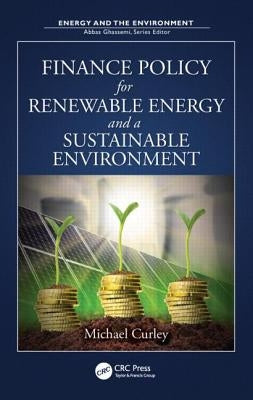
Environmental finance is about creating the greatest environmental benefit for the largest number of people at the lowest possible cost. That is the first and most important principle listed in Finance Policy for Renewable Energy and a Sustainable Environment. Focusing on what the author considers to be the 23 principles of environmental finance, this text examines the key financial principles necessary to build strategies and adopt policies to deal effectively with environmental challenges. The text encourages making financial decisions based on science, not politics, and considers what it takes to design and execute environmental finance programs in the most cost-effective way possible.
Providing a historical overview of how we got to where we are now, and outlining the 23 principles needed to establish a stronger foundation for the future, this text presents the basic financial tools required to understand the concepts presented. It discusses the proper roles of grants, loans and guaranties, the concept and proper use of affordability, understanding leverage, and generating revenue streams for environmental programs. It also examines subsidies, financial risk reduction strategies, and the challenges posed by alternative energy as well as the next generation of environmental programs.
As it relates to how environmental projects and improvements are achieved, Finance Policy for Renewable Energy and a Sustainable Environment outlines the greatest benefits at the lowest possible cost to the public. This text is an ideal resource for upper-level undergraduate students in environmental engineering and business courses, as well as practicing environmental engineers.
Michael Curley is currently a visiting scholar at the Environmental Law Institute in Washington, DC. He founded the Environmental Finance Centers at the University of Maryland, Cleveland State University, and the Maxwell School at Syracuse University. He served as a senior lecturer at the Johns Hopkins University, and he was also an adjunct professor of banking and finance at New York University. He has also taught environmental law and finance at the Vermont Law School. In 1990, he was appointed to the Environmental Financial Advisory Board (EFAB) at the EPA, where he served for 21 years under four US Presidents.
Thanks for subscribing!
This email has been registered!
Take 20% off your first order
Enter the code below at checkout to get 20% off your first order