





Before you leave...
Take 20% off your first order
20% off
Enter the code below at checkout to get 20% off your first order

Discover summer reading lists for all ages & interests!
Find Your Next Read
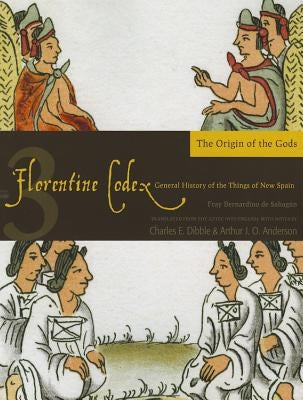
Two of the world's leading scholars of the Aztec language and culture have translated Sahag n's monumental and encyclopedic study of native life in Mexico at the time of the Spanish Conquest. This immense undertaking is the first complete translation into any language of Sahag n's Nahuatl text, and represents one of the most distinguished contributions in the fields of anthropology, ethnography, and linguistics.
Written between 1540 and 1585, the Florentine Codex (so named because the manuscript has been part of the Laurentian Library's collections since at least 1791) is the most authoritative statement we have of the Aztecs' lifeways and traditions--a rich and intimate yet panoramic view of a doomed people. The Florentine Codex is divided by subject area into twelve books and includes over 2,000 illustrations drawn by Nahua artists in the sixteenth century. Book Three describes in detail the excitingand sometimes bloody--origin stories of Uitzilopochtli, Titlacauan, and Quetzalcoatl. The appendix discusses other significant religious aspects of the Aztec religion, such as how boys are raised to be high priests and what happens to Aztecs after death.Arthur J. O. Anderson (1907-1996) was an anthropologist specializing in Aztec culture and language. He received his MA from Claremont College and his PhD in anthropology from the University of Southern California. He was a curator of history and director of publications at the Museum of New Mexico in Santa Fe and taught at a number of institutions, including San Diego State University, from which he retired.
Charles E. Dibble (1909-2002) was an anthropologist, linguist, and scholar specializing in Mesoamerican cultures. He received his master's and doctorate degrees from the Universidad Nacional Automo de M騙ico and taught at the University of Utah from 1939-1978, where he became a Distinguished Professor of Anthropology. For their work on the Florentine Codex, both Dibble and Anderson received the Mexican Order of the Aztec Eagle, the highest honor of the Mexican government; from the King of Spain the received the Order of Isabella the Catholic (Orden de Isabel la Catica) and the title of Commander (Comendador).Thanks for subscribing!
This email has been registered!
Take 20% off your first order
Enter the code below at checkout to get 20% off your first order