
![Spider-Men: Worlds Collide [Marvel Premier Collection] by Bendis, Brian Michael](http://www.whiterainbookhouse.com/cdn/shop/files/img_2d0d0a87-9d07-4ffd-84f2-c4b241596800_533x.jpg?v=1762317878)




Before you leave...
Take 20% off your first order
20% off
Enter the code below at checkout to get 20% off your first order

Discover summer reading lists for all ages & interests!
Find Your Next Read
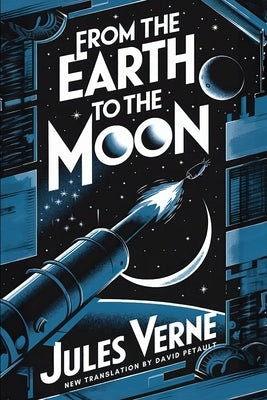
The American Civil War has ended, leaving the Baltimore Gun Club-an organization of artillery experts and weapons enthusiasts-without purpose. No battles to fight, no cannons to design, no wars requiring their expertise. Then Club President Impey Barbicane makes an announcement that will captivate the world: they're going to fire a projectile to the Moon.
The plan is audacious bordering on insane. A cannon 900 feet long, cast into the earth of Florida. Enough gunpowder to shatter windows across three states. Calculations so precise they account for the Earth's rotation and the Moon's gravitational pull. As nations compete to fund the project and crowds gather to witness history, the enterprise transforms from engineering experiment into global obsession.
But when the French adventurer Michel Ardan volunteers to actually ride inside the projectile, everything changes. What was theoretical becomes personal. What was impossible becomes merely extraordinarily dangerous.
Published in 1865-104 years before Apollo 11-Jules Verne's From the Earth to the Moon imagined human spaceflight with startling prescience. He got the launch site right (Florida), the crew size right (three men), even the splashdown location right (Pacific Ocean). But beyond its prophetic accuracy, the novel asks a question that still resonates: What do we do with all our capacity for destruction when peace suddenly breaks out?
This is Verne at his most playful and penetrating-part engineering manual, part satire of American ambition, part genuine speculation about how far human ingenuity can reach when freed from the constraints of possibility.
Thanks for subscribing!
This email has been registered!
Take 20% off your first order
Enter the code below at checkout to get 20% off your first order