
![Spider-Men: Worlds Collide [Marvel Premier Collection] by Bendis, Brian Michael](http://www.whiterainbookhouse.com/cdn/shop/files/img_2d0d0a87-9d07-4ffd-84f2-c4b241596800_533x.jpg?v=1762317878)




Before you leave...
Take 20% off your first order
20% off
Enter the code below at checkout to get 20% off your first order

Discover summer reading lists for all ages & interests!
Find Your Next Read
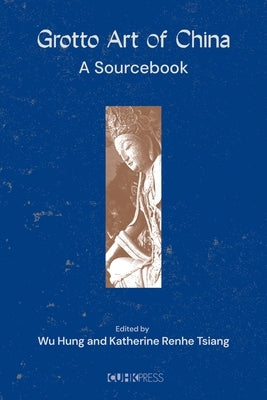
Grotto Art of China: A Sourcebook traces the origins of this unique art form from the Indian subcontinent to its monumental flowering in China, offering a comprehensive look at the artistic, religious, and historical narratives of these sacred sites.
This volume brings together contributions from leading international scholars, providing systematic studies of major cave complexes--such as Dunhuang's Mogao Grottoes, Yungang, Longmen, and Xiangtangshan--alongside lesser-known regional sites. Organized geographically, the book traces the evolution of cave art from its origins in early Indian Buddhist practice to its adaptation in China, where it became a medium for devotion, political authority, and cultural exchange. The book explores a range of topics, including how rulers like the Northern Wei and Tang dynasties sponsored colossal Buddha images, the distinctive artistic styles and techniques across regions like Xinjiang, Gansu, and Shandong, the role of caves in Buddhist worship, and the modern-day challenges of preservation and loss.Wu Hung is Director of the Center for the Art of East Asia at The University of Chicago. His interest in both traditional and modern/contemporary Chinese art has led him to experiment with different ways to integrate these conventionally separate phases into new kinds of art historical narratives.
Katherine Renhe Tsiang is Senior Consultant, Center for the Art of East Asia Department of Art History at The University of Chicago. Her research concentrates on the fields of Chinese Buddhist art, Chinese ceramics and material culture, and cultural interactions and political rhetoric in the production of art in medieval China.Thanks for subscribing!
This email has been registered!
Take 20% off your first order
Enter the code below at checkout to get 20% off your first order