





Before you leave...
Take 20% off your first order
20% off
Enter the code below at checkout to get 20% off your first order

Discover summer reading lists for all ages & interests!
Find Your Next Read
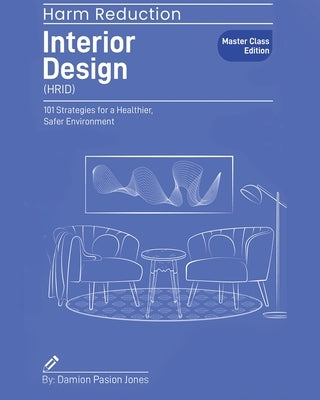
Harm Reduction Interior Design (HRID): 101 Strategies for a Healthier, Safer Environment - Masterclass Edition is the first comprehensive design manual to unite the principles of public health, behavioral science, and interior design into a single, evidence-driven framework. Developed and authored by Damion Pasion Jones, this edition transforms the concept of harm reduction-long applied in healthcare and community outreach-into a spatial methodology that redefines how we build and maintain environments for healing, learning, and human dignity.
Across seven parts and more than one hundred illustrated strategies, HRID challenges conventional design by demonstrating how space itself can reduce risk, foster recovery, and empower wellbeing. Each strategy is built on a foundation of trauma-informed care, material ethics, and measurable environmental outcomes. Readers are guided through the process of assessing hazards not only in physical form-such as lighting, layout, or surface finish-but also in psychological and sensory experience. Through rich case studies and real-world applications, Jones translates complex research into practical, repeatable steps that any designer, facility manager, or policymaker can apply.
The Masterclass Edition expands on the original text with deeper analysis, updated building standards, and cross-disciplinary connections between architecture, mental health, sustainability, and social equity. It explores design's potential to act as a form of prevention and treatment-whether in housing, education, hospitality, behavioral health, or rehabilitation settings. Jones outlines how evidence-based design practices, when integrated with harm reduction thinking, can lead to safer shelters, dignified recovery centers, and inclusive public spaces that balance aesthetics with responsibility.
Unlike most design manuals, HRID situates creativity within ethics. Each section concludes with reflective questions, implementation checklists, and visual storytelling cues that help readers connect intention to impact. The book encourages designers to view themselves as advocates-to measure success not only by how beautiful a space looks, but by how it performs under stress and serves the most vulnerable users.
This is not a decorative guide; it is a professional call to action. From sound attenuation in trauma-informed classrooms to wayfinding systems that reduce anxiety in behavioral health facilities, HRID offers design solutions that are both visionary and grounded in real-world constraints. The manual includes academic references, material science data, and contextual insights that align with current codes, including CBC 2022 and ADA accessibility standards.
Intended Audience:
By merging form, function, and compassion, Harm Reduction Interior Design reframes the built environment as a living system of care. It is both a practical reference and a philosophical blueprint for the next generation of designers committed to creating spaces that do no harm-and, when possible, spaces that heal.
Thanks for subscribing!
This email has been registered!
Take 20% off your first order
Enter the code below at checkout to get 20% off your first order