





Before you leave...
Take 20% off your first order
20% off
Enter the code below at checkout to get 20% off your first order

Discover summer reading lists for all ages & interests!
Find Your Next Read
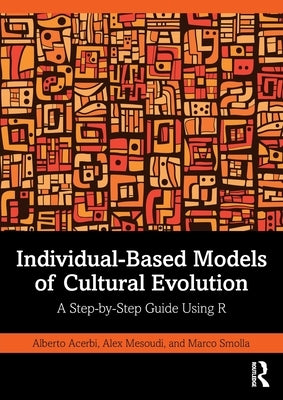
Individual-Based Models of Cultural Evolution shows readers how to create individual-based models of cultural evolution using the programming language R. The field of cultural evolution has emerged in the last few decades as a thriving, interdisciplinary effort to understand cultural change and cultural diversity within an evolutionary framework and using evolutionary tools, concepts, and methods.
Given its roots in evolutionary biology, much of cultural evolution is grounded in, or inspired by, formal models. Yet many researchers interested in cultural evolution come from backgrounds that lack training in formal modelling, such as psychology, anthropology or archaeology. This book addresses that gap. It provides example code in R for readers to run their own models, moving from very simple models of the basic processes of cultural evolution, such as biased transmission and cultural mutation, to more advanced topics such as the evolution of social learning, demographic effects, and social network analysis.
Features of this book:
This is an essential resource for researchers and students interested in cultural evolution, including disciplines such as psychology, anthropology, archaeology, and biology as well as sociology and digital humanities.
Author: Alberto Acerbi, Alex Mesoudi, Marco Smolla
ISBN-10: 1032252065
ISBN-13: 9781032252063
Publisher: Routledge
Language: English
Published: 07/05/2022
Pages: 216
Format: Paperback
Weight: 0.83lbs
Size: 9.69h x 6.85w x 0.47d
Alberto Acerbi is Lecturer in the Centre for Culture and Evolution, Brunel University London, UK. He is interested in contemporary cultural phenomena, using a naturalistic, quantitative, and evolutionary approach with different methodologies, especially individual-based models and quantitative analysis of large-scale cultural data.
Alex Mesoudi is Professor of Cultural Evolution at the University of Exeter's Cornwall Campus, UK. He conducts lab experiments, constructs theoretical models and analyses real-world data to try to understand how human culture evolves over time and shapes human behaviour.
Marco Smolla is Postdoctoral researcher at the Max-Planck Institute for Evolutionary Anthropology, Germany. He is a computational and evolutionary biologist, with a special interest in how humans shape and are shaped by culture. Using simulation models and dynamic social networks, he studies which conditions lead to the emergence and adoption of new and existing culture.
Thanks for subscribing!
This email has been registered!
Take 20% off your first order
Enter the code below at checkout to get 20% off your first order