



Before you leave...
Take 20% off your first order
20% off
Enter the code below at checkout to get 20% off your first order

Discover summer reading lists for all ages & interests!
Find Your Next Read
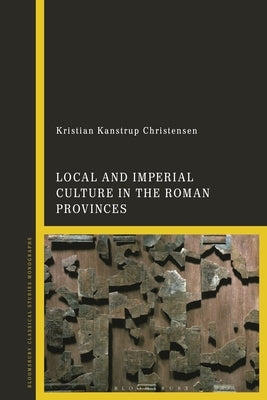
By adopting a theoretical approach rooted in the anthropological study of agrarian communities, this book investigates the reach and impact of Roman civilisation while considering the limitations of pre-industrial communication and social organisation. For half a millennium, the Roman state unified the Mediterranean world in an empire without parallel in European history. Yet, to what extent did this vast domain truly integrate the diverse cultures under its rule? This question forms the foundation for a novel cultural history that captures both sides of ancient imperialism: the connectivity fostered between local cultures and the hierarchical structures imposed upon them.
This framework is tested through a series of case studies, drawing on diverse sources from across the empire, including Rhineland portraiture, Egyptian votive dedications, British ceramic assemblages, the letters of Saint Augustine, Pannonian burial mounds, Anatolian maledictions against grave robbers, Gaulish pottery firing lists, and more. These studies reveal that Roman rule generated significant cultural interaction, with the practices of the imperial elite deeply influencing local communities, sometimes even transforming them. However, full participation in elite culture remained accessible only to a small segment of the provincial population. As a result, even after centuries of Roman dominion, local cultures persisted.Thanks for subscribing!
This email has been registered!
Take 20% off your first order
Enter the code below at checkout to get 20% off your first order