





Before you leave...
Take 20% off your first order
20% off
Enter the code below at checkout to get 20% off your first order

Discover summer reading lists for all ages & interests!
Find Your Next Read
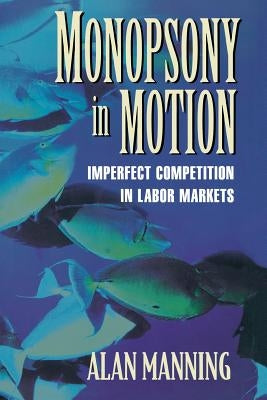
What happens if an employer cuts wages by one cent? Much of labor economics is built on the assumption that all the workers will quit immediately. Here, Alan Manning mounts a systematic challenge to the standard model of perfect competition. Monopsony in Motion stands apart by analyzing labor markets from the real-world perspective that employers have significant market (or monopsony) power over their workers. Arguing that this power derives from frictions in the labor market that make it time-consuming and costly for workers to change jobs, Manning re-examines much of labor economics based on this alternative and equally plausible assumption.
The book addresses the theoretical implications of monopsony and presents a wealth of empirical evidence. Our understanding of the distribution of wages, unemployment, and human capital can all be improved by recognizing that employers have some monopsony power over their workers. Also considered are policy issues including the minimum wage, equal pay legislation, and caps on working hours. In a monopsonistic labor market, concludes Manning, the "free" market can no longer be sustained as an ideal and labor economists need to be more open-minded in their evaluation of labor market policies. Monopsony in Motion will represent for some a new fundamental text in the advanced study of labor economics, and for others, an invaluable alternative perspective that henceforth must be taken into account in any serious consideration of the subject.Thanks for subscribing!
This email has been registered!
Take 20% off your first order
Enter the code below at checkout to get 20% off your first order