




Before you leave...
Take 20% off your first order
20% off
Enter the code below at checkout to get 20% off your first order

Discover summer reading lists for all ages & interests!
Find Your Next Read
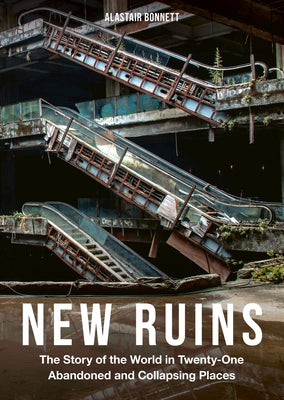
This is the age of ruins. The wrecks of our speeding, super-sizing, impatient era can be found on the Moon and at the bottom of the sea, in the internet's haunted attics, in desecrated jungles and in abandoned shopping malls inhabited by dust and spiders. We live amid the accumulating debris of an economy that can't stop producing, building and digging, creating mountains of stuff, little of which lasts very long.
The old ruins, those pleasant antiquities, blocks of Sun-warmed marble wedged in romantic sands, are reassuring, and speak of a time when clocks turned slowly. The ruins of the industrial era, old brick-built factories, seem equally distant. They are sweetly melancholic: the wind pushes one last squeak from a rusty wheel and corridors echo with memories of heavy, well-oiled machines. The old ruins appeal to us because we're nostalgic for a world that was less frantic. We like to be fooled that ruins are from the past when, in fact, they describe our present.
This is a book about 21 new ruins. Each one challenges our ideas about what ruins look like and each one has a unique story to tell. They all linked, not just by their novelty, but because each offers a portrait of a world in which abandonment and collapse have become normalised.
Part of what makes the new ruins so strange is their uncertainty. Yesterday's ruins are frozen in time. No one is planning to rebuild Pompeii. The new ruins are queasier. They are dead but, somehow, keep breathing: the ruined virtual kingdom can be rebooted, so too the empty retail park. Perhaps even wrecked nature can be resurrected, the Amazon rebuilt, the ocean's eco-systems reconstructed. The new ruins are zombies, dead but always threatening to spring back to life.
In many cities ruins are everywhere. Ruination flows from so many aspects of modern life - its remorseless innovation as well as its destructiveness - that we may be losing our ability to see what a strange, churning world it has created. This title drags new ruins into the light and shows how extraordinary they are. You will never think of ruins in the same way again.
ALASTAIR BONNETT is Professor of Social Geography at Newcastle University. Previous books include Off the Map, What is Geography? and How to Argue. He has also contributed to history and current affairs magazines on a wide variety of topics, such as world population and radical nostalgia. Alastair was editor of the avant-garde, psychogeographical, magazine Transgressions: A Journal of Urban Exploration between 1994-2000. Alastair lives in Newcastle.
Thanks for subscribing!
This email has been registered!
Take 20% off your first order
Enter the code below at checkout to get 20% off your first order