





Before you leave...
Take 20% off your first order
20% off
Enter the code below at checkout to get 20% off your first order

Discover summer reading lists for all ages & interests!
Find Your Next Read
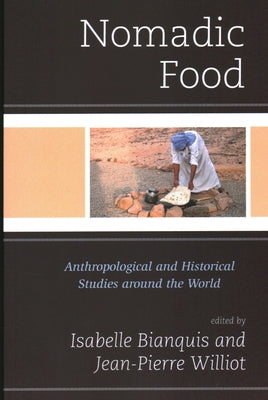
In this book, contributors examine the many meanings of the term 'nomad' through the study of food habits. Food and beverage products have become just as nomadic as other objects, such as telephones and computers, whereas in the past only food and money were able to move about with their carriers. Food industries have seized control of this trend to make it the characteristic feature of consumption outside the home - always faster and more convenient, the just-in-time meal: 'what I want, when I want, where I want', snacks, finger food, and street food. The terms reveal the contemporary modernity and spread of food practices, but they are only modified versions of older and more uncommon forms of behavior. Mobility, in the sense of multiple forms of moving about using public or individual, and possibly intermodal, means of transport, on spatial scales and temporal rhythms which are frequent and recurring but variable, responding to professional or leisure needs, can serve as a basic premise in order to gain insight into the concept of food nomadism.
Isabelle Bianquis is Professor of Anthropology at the University of Tours and in the Research team Citeres (UMR 7324). She studies the social and ritual life of the nomads of Mongolia and currently heads a research program on food mutations of the northern peoples in collaboration with the North-Eastern Federal University of Yakutsk (Russia).
Jean-Pierre Williot is Professor of Contemporary History at Sorbonne University, Paris. He is author or co-author of twenty books about various topics (history of gas industry, history of railways, food history). His main research interests history of consumption and innovation.
Thanks for subscribing!
This email has been registered!
Take 20% off your first order
Enter the code below at checkout to get 20% off your first order