



Before you leave...
Take 20% off your first order
20% off
Enter the code below at checkout to get 20% off your first order

Discover summer reading lists for all ages & interests!
Find Your Next Read
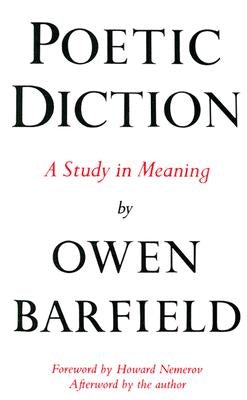
Barfield discusses poetry's meaning in terms of both his personal experience and objective standards of criticism.
Poetic Diction, first published in 1928, begins by asking why we call a given grouping of words "poetry" and why these arouse "aesthetic imagination" and produce pleasure in a receptive reader. Returning always to this personal experience of poetry, Owen Barfield at the same time seeks objective standards of criticism and a theory of poetic diction in broader philosophical considerations on the relation of world and thought. His profound musings explore concerns fundamental to the understanding and appreciation of poetry, including the nature of metaphor, poetic effect, the difference between verse and prose, and the essence of meaning.
CONTRIBUTOR: Howard Nemerov.
OWEN BARFIELD, whom C. S. Lewis called the "wisest and best of my unofficial teachers," is a philosopher and author of many books, including Saving the Appearances, Unancestral Voice, The Rediscovery of Meaning and Other Essays, Owen Barnfield on C. S. Lewis, and History, Guilt, and Habit. Born in 1898, he lives in East Sussex, England.
Thanks for subscribing!
This email has been registered!
Take 20% off your first order
Enter the code below at checkout to get 20% off your first order