




Before you leave...
Take 20% off your first order
20% off
Enter the code below at checkout to get 20% off your first order

Discover summer reading lists for all ages & interests!
Find Your Next Read
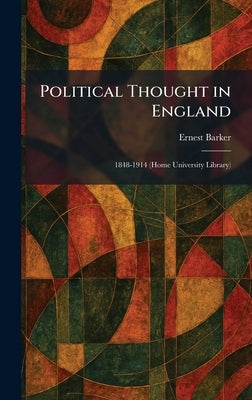
"Political Thought in England, 1848-1914" provides a comprehensive survey of the intellectual and political developments that shaped British society during the mid-to-late Victorian and Edwardian eras. Written by the distinguished scholar Ernest Barker, this work examines the evolution of political ideologies from the revolutionary fervor of 1848 to the precipice of the First World War.
The text explores the shifting landscape of English thought, analyzing the influence of major figures such as Herbert Spencer, T.H. Green, and the Utilitarians. Barker masterfully traces the transition from individualistic liberalism toward more socialistic and collectivist theories, reflecting the changing role of the state in response to industrialization and social reform. Through a clear and scholarly lens, the book addresses key themes including the nature of liberty, the authority of the state, and the development of democratic ideals.
Ideal for students of history and political science, this volume offers an essential guide to the theories that defined a pivotal century in British politics. It remains a foundational text for understanding how the intellectual climate of the nineteenth century paved the way for modern political structures.
This work has been selected by scholars as being culturally important, and is part of the knowledge base of civilization as we know it. This work was reproduced from the original artifact, and remains as true to the original work as possible. Therefore, you may see the original copyright references, library stamps (as most of these works have been housed in our most important libraries around the world), and other notations in the work.
This work is in the public domain in the United States of America, and possibly other nations. Within the United States, you may freely copy and distribute this work, as no entity (individual or corporate) has a copyright on the body of the work.
As a reproduction of a historical artifact, this work may contain missing or blurred pages, poor pictures, errant marks, etc. Scholars believe, and we concur, that this work is important enough to be preserved, reproduced, and made generally available to the public. We appreciate your support of the preservation process, and thank you for being an important part of keeping this knowledge alive and relevant.
Thanks for subscribing!
This email has been registered!
Take 20% off your first order
Enter the code below at checkout to get 20% off your first order