




Before you leave...
Take 20% off your first order
20% off
Enter the code below at checkout to get 20% off your first order

Discover summer reading lists for all ages & interests!
Find Your Next Read
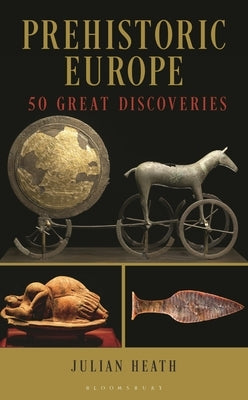
A full-color examination of 50 fascinating and important archaeological discoveries from prehistoric Europe.
Countless archaeological sites and artefacts relating to the diverse prehistoric peoples who occupied the landscapes of Europe thousands of years ago, have been unearthed, either by archaeologists, or by lucky individuals who stumbled across them by chance. Prehistoric Europe: 50 Great Discoveries examines a small, but carefully chosen selection of sites and artefacts from among this abundance of archaeological evidence, all of which are remarkable, and provides fascinating insights into Europe's distant past and its long-lost prehistoric societies. These 50 discoveries cover some sixty thousand years of European prehistory, beginning in the Middle Paleolithic ('Old Stone Age), the time of our enigmatic ancient cousins, the Neanderthals, and ending in the Iron Age, the time of 'Celtic' society, and marking the last chapter in the remarkable story of prehistoric Europe. Lying between the Middle Paleolithic and the Iron Age discoveries are those from Mesolithic ('Middle Stone Age'), Neolithic ('New Stone Age'), Chalcolithic ('Copper Age'), and Bronze Age Europe. The Mesolithic, Neolithic, Chalcolithic and Bronze Age, mark the time of Europe's final hunter-gatherer societies, its first farming communities, and the emergence of metalworking, respectively.Julian Heath is a freelance illustrator and excavator on archaeological sites in Europe and Egypt. Heath has also lectured at the University of Liverpool, published several books on prehistoric archaeology and Egyptology and is also a regular contributor to Ancient Egypt magazine. He is the author of Exploring Megalithic Europe: Amazing Sites to See for Yourself (Rowman & Littlefield, 2019) and Archaeology Hotspot Egypt: Unearthing the Past for Armchair Archaeologists ((Rowman & Littlefield, 2015).
He was educated at the University of Liverpool, from where he graduated with a Bachelor of Arts and a Master of Arts in Archaeology.Thanks for subscribing!
This email has been registered!
Take 20% off your first order
Enter the code below at checkout to get 20% off your first order