



Before you leave...
Take 20% off your first order
20% off
Enter the code below at checkout to get 20% off your first order

Discover summer reading lists for all ages & interests!
Find Your Next Read
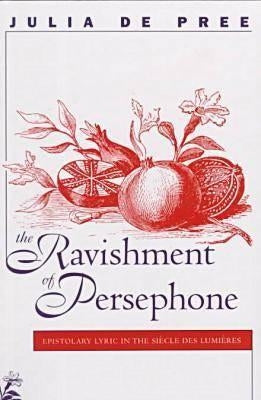
This study delineates a theory of epistolary lyric that refutes historical notions of a siècle sans poésie. Julia De Pree argues that monophonic, epistolary texts written during the Ancien Régime both reflect and resist the Classical legacy and at the same time anticipate the nineteenth-century prose poem. De Pree illustrates her theory of epistolary lyric through readings in the historical canon (Montesquieu, Diderot, Rousseau, Laclos) but emphasizes the contributions of the épistolière: Françoise de Graffigny, Isabelle de Charrière, and Marie-Jeanne Riccoboni. She argues that through their relatively short length, their incorporation of blank space, and their monophonic voice, female-authored letter-texts articulate epistolary lyric at the intersection of narrative, theatrical, and poetic codes. De Pree concludes that as a plural and protean form, epistolary lyric anticipates the so-called poetic revolution(s) that transformed nineteenth-century French lyric.
Thanks for subscribing!
This email has been registered!
Take 20% off your first order
Enter the code below at checkout to get 20% off your first order