




Before you leave...
Take 20% off your first order
20% off
Enter the code below at checkout to get 20% off your first order

Discover summer reading lists for all ages & interests!
Find Your Next Read
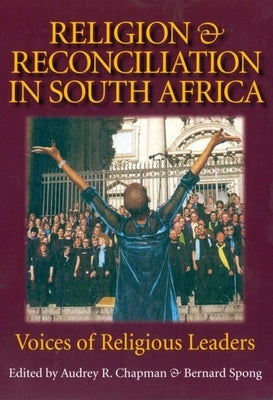
Postapartheid South Africa's efforts to come to terms with its past, particularly its Truth and Reconciliation Commission's emphasis on forgiveness and reconciliation, is of special interest to many in the world community. The Truth and Reconciliation Commission (TRC), led by Archbishop Desmond Tutu, was mandated to go beyond truth-finding and to "promote national unity and reconciliation in a spirit of understanding which transcends the conflict and divisions of the past." In contrast with other truth commissions, the TRC was led by clerics rather than lawyers and judge, and the TRC's approach to reconciliation was shaped by and imbued with religious content. The TRC submitted its final report to the Mandela administration in October 1998.
Over the next two years, the Rev. Bernard Spong, former communications director of the South African Council of Churches, conducted a series of in-depth interviews about the TRC with thirty-three key religious figures. In this volume, they discuss and evaluate the following issues:
-How should we understand the concept of national or political reconciliation and its requirements?The conversations presented in this volume, and the essays interpreting them, seek to illuminate issues and questions raised by the TRC model, including how to conceptualize reconciliation and the differences between political and religious approaches.
Audrey R. Chapman serves as the director of the Science and Human Rights Program of the American Association for the Advancement of Science (AAAS) and is the former director of the Program of Dialogue for Ethics for AAAS. She works closely with the United Nations Office of the High Commission for Human Rights and the United Nations Committee on Economic, Social, and Cultural Rights.
Reverend Bernard Spong is a native of the United Kingdom who came to South Africa as a missionary in 1963. In 1977 he began a media training organization working alongside the South African Council of Churches (SACC) and in 1991 became the communications director of the SACC for the years of negotiation and transition in South Africa.
Thanks for subscribing!
This email has been registered!
Take 20% off your first order
Enter the code below at checkout to get 20% off your first order