





Before you leave...
Take 20% off your first order
20% off
Enter the code below at checkout to get 20% off your first order

Discover summer reading lists for all ages & interests!
Find Your Next Read
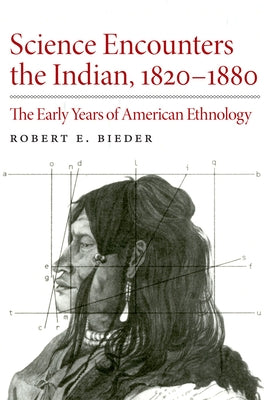
Early nineteenth-century ethnologists viewed the American Indians through a prism of intellectual arguments inherited from European Enlightenment thinkers. From that perspective, the Indians were seen as an inferior race whose primitive existence stemmed from an adverse environment, and whose "progress" depended on the civilizing effects of education and an altered physical environment.
The evolution away from that view, in the face of new physical evidence and changing cultural perceptions, is the theme of this in-depth study of five ethnologists whose research and writing paralleled the development of nineteenth-century ethnology in the United States. The five major figures were Albert Gallatin, Samuel G. Morton, Ephraim G. Squier, Henry Rowe Schoolcraft, and Lewis Henry Morgan.
Much more than biology, this study explores the social and intellectual context within which these scientists proposed their theories, as well as the significance of those theories for the crucial issues of Indian advancement, intermarriage and origins. It is also a history of the emerging profession of ethnology, in which scholars debated the Indian's potential for civilization, organized professional societies, and sought avenues to publish their unusual research.
Distinguished anthropologist Raymond D. Fogelson says of this groundbreaking work by Robert E. Bieder: "It covers in comprehensive and comprehensible fashion the backgrounds that produced a distinctive American ethnology and its later professionalization. Subsequent research will be footnotes to Bieder's magnificent effort. The scholarship is impeccable. It is one of those books of lasting value."
Thanks for subscribing!
This email has been registered!
Take 20% off your first order
Enter the code below at checkout to get 20% off your first order