



Before you leave...
Take 20% off your first order
20% off
Enter the code below at checkout to get 20% off your first order

Discover summer reading lists for all ages & interests!
Find Your Next Read
Joan Bocher was burned to death in England in 1550 AD. Her crime? The Encyclop dia Britannica (1964) says: "She was condemned for open blasphemy in denying the Trinity, the one offence which all the church had regarded as unforgivable ever since the struggle with Arianism."
On October 27th, 1553, Michael Servetus, a medical practitioner, was burned at the stake at Geneva, Switzerland, for denying the doctrine of the Trinity.
In 1693, a pamphlet attacking the Trinity was burned by order of the House of Lords, and the following year its printer and author were prosecuted.
In 1697, Thomas Aikenhead, an 18 year old student, was charged with denying the Trinity and hanged at Edinburgh, Scotland.
In 1711, Sir Isaac Newton's friend, William Whiston (translator of the works of Jewish historian Josephus), lost his professorship at Cambridge for denying the Trinity.
An Historical Account of Two Notable Corruptions of Scripture, detailing Sir Isaac Newton's condemnation of the Trinity teaching, was first published in 1754, a full twenty-seven years after Newton's death, due to the controversies surrounding the doctrine.
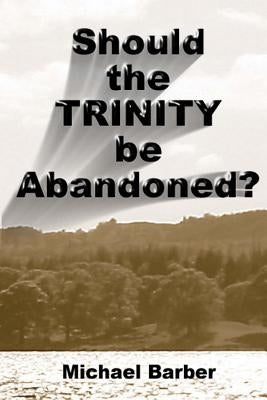
In view of the great quantity of books available in support of the doctrine of the Trinity, it may seem unusual to find that this book denies it. Fortunately the author should fare better than the individuals referred to above in view of the available freedom of speech. But it may be viewed as heretical nonetheless. The central doctrine of Christian churches, accepted by far and away the majority as a divinely authored teaching, the Trinity seems entrenched beyond question of doubt.
However, Bible students rely on Bible translations when studying God's Word, in contrast with the Hebrew, Aramaic, and Greek manuscripts from which all modern-day translations are produced. This book reveals that scriptures which support the teaching of the Trinity in some Bible versions are incorrectly translated. The student can be forgiven for readily accepting the Trinity when his or her own Bible translation clearly teaches it Such is the power of the Bible (see Hebrews 4:12), that translations have taken on the status that the original manuscripts by the Bible writers held. However, no translation today can successfully claim to be "inspired by God" (2 Timothy 3:16). Consequently, throughout this book, appeal is made to Bible manuscripts and accredited collections to verify the true sense of a passage of text.
The finest scholarship on biblical manuscripts and on Hebrew and Greek language syntax and word morphology is introduced and quoted throughout this work, demonstrating effectively that the linguistic and contextual considerations for each passage of scripture are in agreement in their refutation of the Trinitarian view.
Author: Michael a. Barber
ISBN-10: 1500403725
ISBN-13: 9781500403720
Publisher: Createspace Independent Publishing Platform
Language: English
Published: 07/04/2014
Pages: 232
Format: Paperback
Weight: 0.70lbs
Size: 9.02h x 5.98w x 0.49d
Thanks for subscribing!
This email has been registered!
Take 20% off your first order
Enter the code below at checkout to get 20% off your first order