
![Spider-Men: Worlds Collide [Marvel Premier Collection] by Bendis, Brian Michael](http://www.whiterainbookhouse.com/cdn/shop/files/img_2d0d0a87-9d07-4ffd-84f2-c4b241596800_533x.jpg?v=1762317878)




Before you leave...
Take 20% off your first order
20% off
Enter the code below at checkout to get 20% off your first order

Discover summer reading lists for all ages & interests!
Find Your Next Read
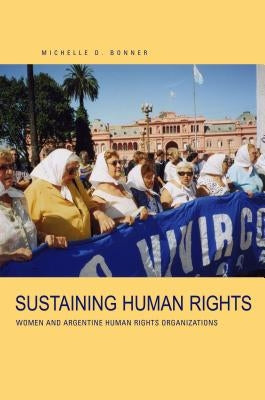
The "disappearance" and torture of many people during the worst days of the authoritarian regimes that ruled many Latin American countries in the 1970s have been well documented and widely condemned as abuses of human rights. Less well known is what has become of the movements for human rights once democratic governments were restored in these countries. In this book, Michelle Bonner reveals how the defense of human rights continues today, taking Argentina as her primary example (with comparison to Chile in the final chapter).
Bonner shows that the role of women--viewed as protectors of the family--is key to understanding how human rights movements have evolved. Moreover, the continuity of the "historical frames" used to legitimate their activity is an essential element in the success of their efforts, even while the claimed abuse has changed from the political repression undertaken by the dictators' minions to the economic hardships created by market inequities resulting from neoliberal policies.
Based on extensive field research and providing a long historical view extending from colonial times to the present, this study compares the activities of the ten most prominent human rights organizations in Argentina and assesses the responses of both state and society.
Michelle D. Bonner is Assistant Professor of Political Science at the University of Victoria.
Thanks for subscribing!
This email has been registered!
Take 20% off your first order
Enter the code below at checkout to get 20% off your first order