




Before you leave...
Take 20% off your first order
20% off
Enter the code below at checkout to get 20% off your first order

Discover summer reading lists for all ages & interests!
Find Your Next Read
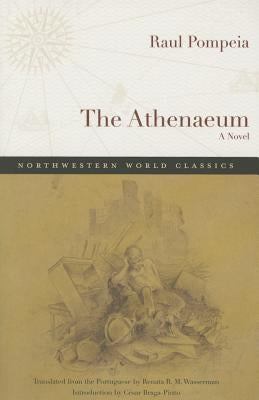
Originally published as O Ateneu in 1888, The Athenaeum is a classic of Brazilian literature, here translated into English in its entirety for the first time. The first-person narrator, Sergio, looks back to his time at the eponymous boarding school, with its autocratic principal and terrifying student body. Sergio's account of his humiliating experiences as a student, with its frank discussion of corruption and homoerotic bullying, makes it clear that his school is structured and administered so as to reproduce the class divisions and power structure of the larger Brazilian society.
In its muckraking mode, the novel is in the spirit of Naturalism, imported from France and well-acclimated to Brazil, where it blossomed. At the same time, Pompéia maintains the novel's credibility as a bildungsroman by portraying the narrator's psychological development. The novel's conclusion suggests both a doomed society and its possible redemption, indicative of a moment of upheaval and transition in Brazilian history.
RAUL POMPÉIA (1863-1895), a canonical nineteenth-century Brazilian author, wrote novels, short stories, and journalistic pieces. He belonged to the Naturalist school, though his work sometimes subverted its principles. He was also a political activist, eventually committing suicide when his writing got him in trouble with the authorities.
RENATA R. M. WASSERMAN is professor emerita of English at Wayne State University.
CÉSAR BRAGA-PINTO is an associate professor of Brazilian and comparative literature at Northwestern University
Thanks for subscribing!
This email has been registered!
Take 20% off your first order
Enter the code below at checkout to get 20% off your first order