





Before you leave...
Take 20% off your first order
20% off
Enter the code below at checkout to get 20% off your first order

Discover summer reading lists for all ages & interests!
Find Your Next Read
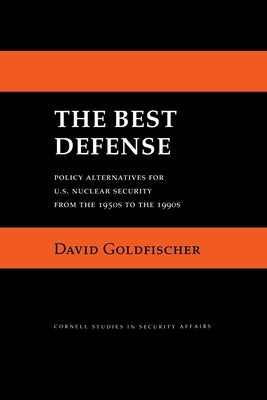
The Best Defense considers fundamental questions regarding the United States and the Soviet Union acquiring capabilities to destroy each other in a nuclear war. Was it inevitable? Or could they have agreed instead to address the nuclear danger through mutual emphasis on defenses? Might such an approach be a feasible option for nuclear powers in today's world?
David Goldfischer looks at how figures including J. Robert Oppenheimer, Donald G. Brennan, Freeman Dyson, and Jonathan Schell advanced compelling arguments for seeking an arms control agreement favoring defenses against nuclear attack. First developed by Oppenheimer as an alternative to a dangerous reliance on strategic bombing and again proposed in the 1960's as preferable to basing arms control on "mutual assured destruction," mutual defense emphasis was briefly adopted as a US arms control proposal when the cold war waned in the mid-1980s.
The Best Defense offers provocative explanations for why this approach was rejected and argues that the compelling need to protect populations makes mutual defense emphasis the most promising basis for an enduring nuclear arms control and disarmament regime.
David Goldfischer is Associate Professor at the Josef Korbel School of International Studies, University of Denver.
Thanks for subscribing!
This email has been registered!
Take 20% off your first order
Enter the code below at checkout to get 20% off your first order