





Before you leave...
Take 20% off your first order
20% off
Enter the code below at checkout to get 20% off your first order

Discover summer reading lists for all ages & interests!
Find Your Next Read
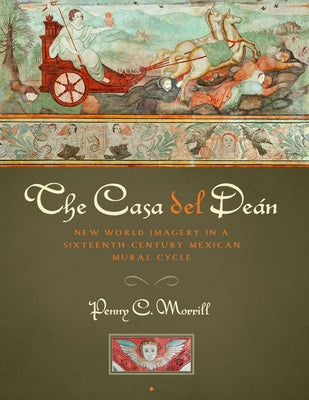
The Casa del De疣 in Puebla, Mexico, is one of few surviving sixteenth-century residences in the Americas. Built in 1580 by Tom疽 de la Plaza, the Dean of the Cathedral, the house was decorated with at least three magnificent murals, two of which survive. Their rediscovery in the 1950s and restoration in 2010 revealed works of art that rival European masterpieces of the early Renaissance, while incorporating indigenous elements that identify them with Amerindian visual traditions.
Extensively illustrated with new color photographs of the murals, The Casa del De疣 presents a thorough iconographic analysis of the paintings and an enlightening discussion of the relationship between Tom疽 de la Plaza and the indigenous artists whom he commissioned. Penny Morrill skillfully traces how native painters, trained by the Franciscans, used images from Classical mythology found in Flemish and Italian prints and illustrated books from France--as well as animal images and glyphic traditions with pre-Columbian origins--to create murals that are reflective of Don Tom疽's erudition and his role in evangelizing among the Amerindians. She demonstrates how the importance given to rhetoric by both the Spaniards and the Nahuas became a bridge of communication between these two distinct and highly evolved cultures. This pioneering study of the Casa del De疣 mural cycle adds an important new chapter to the study of colonial Latin American art, as it increases our understanding of the process by which imagery in the New World took on Christian meaning.
Thanks for subscribing!
This email has been registered!
Take 20% off your first order
Enter the code below at checkout to get 20% off your first order