
![Spider-Men: Worlds Collide [Marvel Premier Collection] by Bendis, Brian Michael](http://www.whiterainbookhouse.com/cdn/shop/files/img_2d0d0a87-9d07-4ffd-84f2-c4b241596800_533x.jpg?v=1762317878)




Before you leave...
Take 20% off your first order
20% off
Enter the code below at checkout to get 20% off your first order

Discover summer reading lists for all ages & interests!
Find Your Next Read
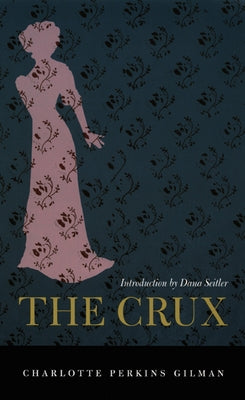
Dana Seitler's introduction provides historical context, revealing The Crux as an allegory for social and political anxieties-including the rampant insecurities over contagion and disease-in the United States at the beginning of the twentieth century. Seitler highlights the importance of The Crux to understandings of Gilman's body of work specifically and early feminism more generally. She shows how the novel complicates critical history by illustrating the biological argument undergirding Gilman's feminism. Indeed, The Crux demonstrates how popular conceptions of eugenic science were attractive to feminist authors and intellectuals because they suggested that ideologies of national progress and U.S. expansionism depended as much on women and motherhood as on masculine contest.
Charlotte Perkins Gilman (1860-1935) was the author of novels, short stories, poems, and works of nonfiction. She is best known for "The Yellow Wallpaper" (1892), Women and Economics (1898), and the novel Herland (1915).
Dana Seitler is Assistant Professor of Literary Theory and Cultural Studies at Wayne State University.
Thanks for subscribing!
This email has been registered!
Take 20% off your first order
Enter the code below at checkout to get 20% off your first order