





Before you leave...
Take 20% off your first order
20% off
Enter the code below at checkout to get 20% off your first order

Discover summer reading lists for all ages & interests!
Find Your Next Read
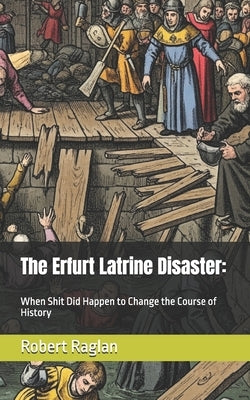
On July 26, 1184, a routine political assembly in Erfurt turned into one of history's most bizarre disasters when the floor collapsed, plunging dozens of German nobles into a cesspit below. King Henry VI had convened the meeting to resolve a territorial dispute between Landgrave Louis III of Thuringia and Archbishop Conrad of Mainz, gathering the Holy Roman Empire's political elite in what should have been a straightforward diplomatic session.
Instead, structural failure combined with medieval waste management to create catastrophe. The wooden floor, unable to support the weight of heavily armored nobles and their retinues, gave way during the assembly. Approximately 60 nobles died, drowning in decades of accumulated human waste or succumbing to toxic gases, while others were crushed by falling debris.
Henry VI and Archbishop Conrad survived by clinging to iron railings in a stone alcove, while Louis III was rescued from the cesspit. Henry's survival proved historically crucial-he went on to become Holy Roman Emperor, conquer Sicily, and capture Richard the Lionheart.
This darkly comic medieval catastrophe reveals timeless lessons about infrastructure failure, political fragility, and the gap between human pretension and competence. The disaster that was meant to demonstrate royal authority instead showcased the fundamental vulnerabilities of medieval civilization, where even the most prestigious gathering could be undone by rotten beams and poor sanitation.
Thanks for subscribing!
This email has been registered!
Take 20% off your first order
Enter the code below at checkout to get 20% off your first order