




Before you leave...
Take 20% off your first order
20% off
Enter the code below at checkout to get 20% off your first order

Discover summer reading lists for all ages & interests!
Find Your Next Read
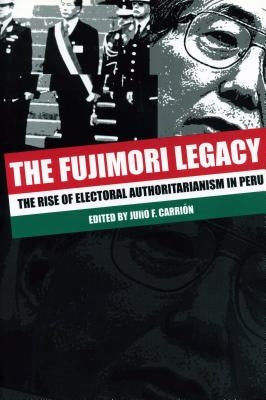
President Alberto Fujimori's sudden resignation in November 2000 brought an end to a highly controversial period in Peruvian history. His meteoric rise to power in 1990 fueled by widespread popular support, followed by his decision to dissolve Congress and rule by decree in 1992, has made his regime a focus of special attention by scholars trying to understand this complex and contradictory presidency.
This book offers a comprehensive assessment of Fujimori's regime in the context of Latin America's struggle to consolidate democracy after years of authoritarian rule. Setting the regime conceptually in a discussion of alternative forms of government--delegative democracy, neopopulism, and electoral authoritarianism--the essays study it from two different perspectives: external (in its relations with political parties, Lima's mayors, public opinion, women, the U.S. government) and internal (examining economic policies as determined by governing coalitions, networks of corruption, and Fujimori's unsavory relationship with his security advisor Vladimiro Montesinos). Overall, The Fujimori Legacy helps illuminate the persistent obstacles that Latin American countries face in establishing democracy.
In addition to the editor, contributors are Robert Barr, Maxwell Cameron, Catherine Conaghan, Henry Dietz, Philip Mauceri, Cynthia McClintock, David Scott Palmer, Kenneth Roberts, Gregory Schmidt, John Sheahan, Kurt Weyland, and Carol Wise.
Julio F. Carrion is Associate Professor of Political Science and International Relations at the University of Delaware.
Thanks for subscribing!
This email has been registered!
Take 20% off your first order
Enter the code below at checkout to get 20% off your first order