




Before you leave...
Take 20% off your first order
20% off
Enter the code below at checkout to get 20% off your first order

Discover summer reading lists for all ages & interests!
Find Your Next Read
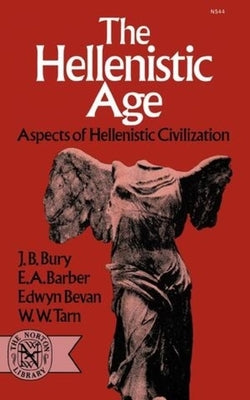
E. A. Barber's essay, "Alexandrian Literature," deals with the characteristic styles of the period, Alexandrian poetry, and the new prose forms. Besides the scientific and learned writing it is known for, Professor Barber demonstrates, the age produced much popular satiric and moralizing poetry, realistic mime, epigrams, and parodies.
As the system of the city states declined, increasing social instability fostered the rise of a number of popular philosophies. In another chapter, Edwyn Bevan outlines the similarities and differences between the Platonic, Peripatetic, Stoic, Epicurean, Sceptic, and Cynic schools and the effect of Christianity on their society.
W. W. Tarn's "The Social Question in the Third Century" examines the conditions that led to revolution in the century after Alexander. The author describes the economic disturbances leading to the polarization of classes, and assesses the phases of social revolution as exemplified in the uprisings at Sparta.
Thanks for subscribing!
This email has been registered!
Take 20% off your first order
Enter the code below at checkout to get 20% off your first order