




Before you leave...
Take 20% off your first order
20% off
Enter the code below at checkout to get 20% off your first order

Discover summer reading lists for all ages & interests!
Find Your Next Read
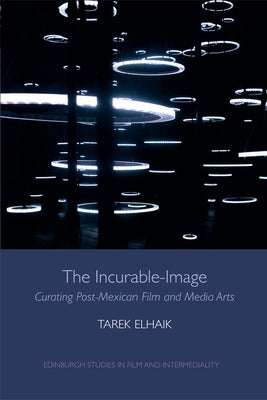
From the 1990s onwards the 'ethnographic turn in contemporary art' has generated intense dialogues between anthropologists, artists and curators. While ethnography has been both generously and problematically re-appropriated by the art world, curation has seldom caught the conceptual attention of anthropologists.
Based on two years of participant-observation in Mexico City, Tarek Elhaik addresses this lacuna by examining the concept-work of curatorial platforms and media artists. Taking his cue from ongoing critiques of Mexicanist aesthetics, and what Roger Bartra calls 'the post-Mexican condition', Elhaik conceptualises curation less as an exhibition-oriented practice within a national culture, than as a figure of care and an image of thought animating a complex assemblage of inter-medial practices, from experimental cinema and installations to curatorial collaborations. Drawing on Gilles Deleuze and Paul Rabinow, the book introduces the concept of the 'Incurable-Image, ' an antidote to our curatorial malaise and the ethical substance for a post-social anthropology of images.
Tarek Elhaik is assistant professor of Anthropology at the University of California, Davis and a film curator. His writings have appeared in books and journals and he has curated several programs and symposia on avant-garde cinema from Latin America and the Arab World. He is also part of a collaborative team of researchers, hosted by the Los Angeles Film Forum and funded by the Getty Foundation, currently curating an anthology and various platforms on experimental media in Latin America.
Thanks for subscribing!
This email has been registered!
Take 20% off your first order
Enter the code below at checkout to get 20% off your first order