
![Spider-Men: Worlds Collide [Marvel Premier Collection] by Bendis, Brian Michael](http://www.whiterainbookhouse.com/cdn/shop/files/img_2d0d0a87-9d07-4ffd-84f2-c4b241596800_533x.jpg?v=1762317878)




Before you leave...
Take 20% off your first order
20% off
Enter the code below at checkout to get 20% off your first order

Discover summer reading lists for all ages & interests!
Find Your Next Read
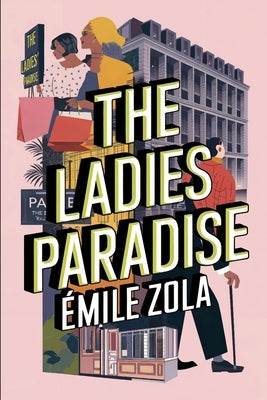
Denise Baudu arrives in Paris seeking work after her parents' deaths. Her uncle owns a small draper's shop being systematically destroyed by the massive department store across the street: The Ladies' Paradise.
Despite her uncle's rage, Denise seeks employment there. She enters an environment transforming nineteenth-century commerce completely. The owner, Octave Mouret, understands that modern retail isn't selling goods but creating desires-women must be seduced through theatrical display, shopping must become entertainment.
Émile Zola published The Ladies' Paradise in 1883 after intensive research at Bon Marché, documenting the architecture designed to maximize exposure, the brutal hierarchies among employees, the seduction psychology deployed, the destruction of traditional businesses.
Denise rises through intelligence and integrity rather than the sexuality other female employees use for advancement. Yet Zola doesn't ignore exploitation: inadequate wages, sexual harassment, the commission system pitting workers against each other. The romance between Denise and Mouret develops as he becomes fascinated by her resistance. She doesn't just marry him-she reforms him, suggests capitalism might operate more humanely.
This optimistic resolution distinguishes the novel from Zola's darker works. Whether this represents genuine politics or commercial calculation remains debated. He admired modern capitalism's energy while maintaining sharp critique: small businesses destroyed, workers exploited, consumer desires manipulated through calculated seduction.
The novel captures the department store's power magnificently-displays overwhelming resistance, merchandise becoming objects of irrational desire. Yet Zola shows genuine pleasures this culture provides: shopping as leisure, social occasion, entertainment accessible to women with limited public recreation options.
For contemporary readers, the relevance is uncomfortable. Amazon destroying bookstores replicates The Ladies' Paradise eliminating drapers. Online algorithms extend Mouret's techniques. The questions remain unresolved: Is shopping authentic pleasure or manufactured desire? Can capitalism be reformed through ethical management?
Accessible, optimistic Zola-but capturing crucial historical transformation with unmatched specificity.
Thanks for subscribing!
This email has been registered!
Take 20% off your first order
Enter the code below at checkout to get 20% off your first order