



Before you leave...
Take 20% off your first order
20% off
Enter the code below at checkout to get 20% off your first order

Discover summer reading lists for all ages & interests!
Find Your Next Read
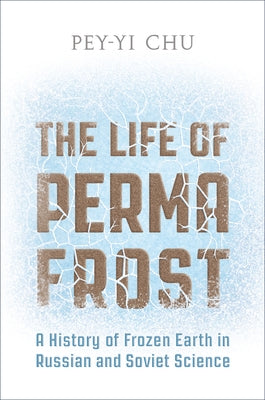
In the Anthropocene, the thawing of frozen earth due to global warming has drawn worldwide attention to permafrost. Contemporary scientists define permafrost as ground that maintains a negative temperature for at least two years. But where did this particular conception of permafrost originate, and what alternatives existed?
The Life of Permafrost provides an intellectual history of permafrost, placing the phenomenon squarely in the political, social, and material context of Russian and Soviet science. Pey-Yi Chu shows that understandings of frozen earth were shaped by two key experiences in the Russian Empire and the Soviet Union. On one hand, the colonization and industrialization of Siberia nourished an engineering perspective on frozen earth that viewed the phenomenon as an aggregate physical structure: ground. On the other, a Russian and Soviet tradition of systems thinking encouraged approaching frozen earth as a process, condition, and space tied to planetary exchanges of energy and matter. Aided by the US militarization of the Arctic during the Cold War, the engineering view of frozen earth as an obstacle to construction became dominant. The Life of Permafrost tells the fascinating story of how permafrost came to acquire life as Russian and Soviet scientists studied, named, and defined it.
Thanks for subscribing!
This email has been registered!
Take 20% off your first order
Enter the code below at checkout to get 20% off your first order