



Before you leave...
Take 20% off your first order
20% off
Enter the code below at checkout to get 20% off your first order

Discover summer reading lists for all ages & interests!
Find Your Next Read
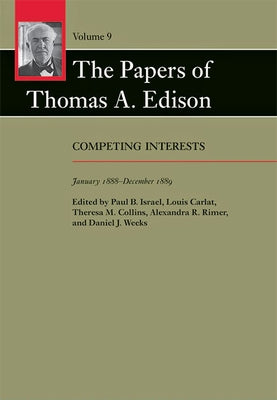
This richly illustrated volume explores Edison's inventive and personal pursuits from 1888 to 1889, documenting his responses to technological, organizational, and economic challenges.
Thomas A. Edison was received at the 1889 Paris Exposition Universelle--the World's Fair--as a conquering hero. Extravagantly f黎ed and besieged by well-wishers, he was seen, like Gustave Eiffel's iron tower, as a triumphal symbol of republicanism and material progress. The visit was a high-water mark of his international fame.
Out of the limelight, Edison worked as hard as ever. On top of his work as an inventor, entrepreneur, and manufacturer, he created a new role as a director of research. At his peerless laboratory in Orange, New Jersey, he directed assistants working in parallel on multiple projects. These included the "perfected" phonograph; a major but little-recognized effort to make musical recordings for sale; the start of work on motion pictures; and improvements in the recovery of low-grade iron ore. He also pursued a public "War of the Currents" against electrical rival George Westinghouse. Keenly attuned to manufacturing as a way to support the laboratory financially and control his most iconic products, Edison created a new cluster of factories. He kept his manufacturing rights to the phonograph while selling the underlying patents to an outside investor in a deal he would regret. When market pressures led to the consolidation of Edison lighting interests, he sold his factories to the new Edison General Electric Company. These changes disrupted his longtime personal and professional relations even as he planned an iron-mining project that would take him to the New Jersey wilderness for long periods.
The ninth volume of the series, Competing Interests explores Edison's inventive and personal pursuits from 1888 to 1889, documenting his responses to technological, organizational, and economic challenges. The book includes 331 documents and hundreds of Edison's drawings, which are all revealing and representative of his life and work in these years. Essays and notes based on meticulous research in a wide range of sources, many only recently available, provide a rich context for the documents.
Paul B. Israel is the director and general editor of the Thomas A. Edison Papers Project at Rutgers University. Louis Carlat and Theresa M. Collins are associate editors and Alexandra R. Rimer and Daniel J. Weeks are assistant editors of the project.
Thanks for subscribing!
This email has been registered!
Take 20% off your first order
Enter the code below at checkout to get 20% off your first order