





Before you leave...
Take 20% off your first order
20% off
Enter the code below at checkout to get 20% off your first order

Discover summer reading lists for all ages & interests!
Find Your Next Read
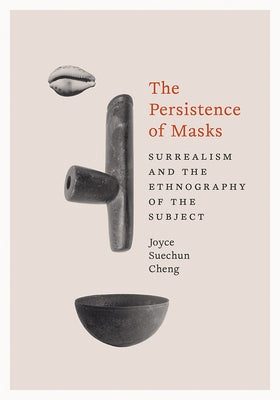
An examination of surrealism's unofficial ethnography of marginalized subjectivities
Though ethnographic surrealism usually refers to the collaboration between professional ethnologists at the Institut de l'Ethnologie in Paris and Georges Bataille's so-called dissident circle of surrealists, Cheng demonstrates that surrealism's unofficial ethnography began long before the founding of the movement. Starting with André Breton's wartime text "Subject" (1916), written when he was still a young psychiatric intern treating traumatized soldiers, she shows how the future surrealist poet shifted from a clinical to a para-ethnographic approach to subjectivity when adopting his patient's first-person voice as a textual mask.
Revealing surrealism to be always implicitly ethnographic, Cheng uncovers deep affinities between archrivals Breton and Bataille, highlights psychiatry's underacknowledged role in surrealism's lay ethnography, and theorizes the surrealists' feminine identification as a means of critiquing power. By broadening the scope of ethnographic surrealism, The Persistence of Masks offers new insights that challenge longstanding beliefs about this multifaceted movement in poetry, the arts, and culture.
Joyce Suechun Cheng is associate professor of art history at the University of Oregon. Her essays and articles on dada, surrealism, and primitivism have appeared in journals such as Modernism/modernity; Res: Anthropology and Aesthetics; and Gradhiva.
Thanks for subscribing!
This email has been registered!
Take 20% off your first order
Enter the code below at checkout to get 20% off your first order