




Before you leave...
Take 20% off your first order
20% off
Enter the code below at checkout to get 20% off your first order

Discover summer reading lists for all ages & interests!
Find Your Next Read
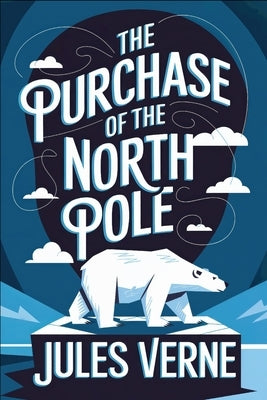
They shot at the moon. Now they plan to move the North Pole. And they don't care who drowns in the process.
The Baltimore Gun Club is back. These American artillery enthusiasts-Barbicane, Nicholl, and the mathematical fanatic J.T. Maston-once fired a projectile at the moon in humanity's first attempt at space travel. Their new scheme is even more audacious: they have purchased the Arctic regions (through dubious legal maneuvering) and plan to tilt Earth's axis using a massive cannon, thereby relocating the North Pole to a more temperate latitude where its supposed mineral wealth can be exploited.
The technical challenge excites them. The profit potential drives them. The environmental consequences-catastrophic flooding, climate disruption, mass death as oceans redistribute and climate zones shift drastically-concern them not at all.
When news of the scheme becomes public, worldwide panic ensues. Governments convene emergency conferences. Scientists issue desperate warnings. The public protests. Yet no one can actually stop the Gun Club. They have broken no international law (since no law governs tilting Earth's axis), they operate from their own territory, and they possess the technical means to execute their plan. Property rights and technical capability, they argue, give them authority to do as they please-regardless of consequences to the billions whose lives hang in the balance.
Jules Verne wrote The Purchase of the North Pole in 1889 as sequel to From the Earth to the Moon, but the tone has shifted dramatically. Where those earlier novels celebrated technological ambition despite its dangers, this late work subjects the same faith in engineering solutions to withering satire. The Gun Club members, portrayed affectionately in the moon novels as eccentric but admirable, now appear as dangerous megalomaniacs-American capitalists whose contempt for democratic opposition, whose willingness to risk planetary catastrophe for profit, whose assumption that ownership and capability grant unlimited authority, represent everything toxic about unbridled technological capitalism.
The novel anticipates contemporary anxieties with disturbing precision: powerful interests willing to risk environmental catastrophe for financial gain, international systems unable to prevent them, public protest rendered ineffectual, and salvation depending not on wisdom or effective governance but on the fortunate incompetence of those who would play God with planetary systems.
Verne's late work is darker, more cynical than his youthful optimism. Personal tragedies and observation of industrial capitalism's effects had transformed his worldview. Yet this pessimism produces remarkably prescient satire-a vision of technological power outpacing wisdom, of profit-driven interests ignoring collective welfare, of environmental crisis caused by those who knew the consequences and proceeded anyway.
From the author of Twenty Thousand Leagues Under the Sea-a satirical warning about technological hubris, corporate irresponsibility, and the willingness of powerful men to risk everything for profit.
Thanks for subscribing!
This email has been registered!
Take 20% off your first order
Enter the code below at checkout to get 20% off your first order