





Before you leave...
Take 20% off your first order
20% off
Enter the code below at checkout to get 20% off your first order

Discover summer reading lists for all ages & interests!
Find Your Next Read
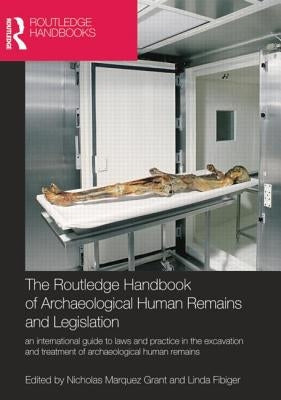
Methodologies and legislative frameworks regarding the archaeological excavation, retrieval, analysis, curation and potential reburial of human skeletal remains differ throughout the world. As work forces have become increasingly mobile and international research collaborations are steadily increasing, the need for a more comprehensive understanding of different national research traditions, methodologies and legislative structures within the academic and commercial sector of physical anthropology has arisen. The Routledge Handbook of Archaeological Human Remains and Legislation provides comprehensive information on the excavation of archaeological human remains and the law through 62 individual country contributions from Europe, Asia, Africa, North America, South America and Australasia.
More specifically, the volume discusses the following:
In addition, an overview of landmark anthropological studies and important collections are provided where appropriate.
The entries are contained by an introductory chapter by the editors which establish the objectives and structure of the book, setting it within a wider archaeological framework, and a conclusion which explores the current European and world-wide trends and perspectives in the study of archaeological human remains. The Routledge Handbook of Archaeological Human Remains and Legislation makes a timely, much-needed contribution to the field of physical anthropology and is unique as it combines information on the excavation of human remains and the legislation that guides it, alongside information on the current state of physical anthropology across several continents. It is an indispensible tool for archaeologists involved in the excavation of human remains around the world.
Dr Nicholas Márquez-Grant is a Forensic Anthropologist and Archaeologist at Cellmark Forensic Services, Abingdon (UK) and a Research Associate at the Institute of Human Sciences, School of Anthropology and Museum Ethnography, University of Oxford. He has done considerable work on human skeletal remains from archaeological contexts ranging from the Neolithic to the 19th century and from a number of countries. He is also regularly involved in forensic work in the UK. He has taught biological anthropology since 2001 at the University of Oxford.
Dr Linda Fibiger is a physical anthropologist whose research interests include interpersonal violence and conflict in prehistoric Europe, Irish Early Christian Burials, and standards and practice in osteoarchaeology. She has published widely on commercial and research projects in Britain and Ireland, and is currently involved in a research project at the University of Cardiff on changing patterns of living in the earliest agricultural societies of central Europe.
Thanks for subscribing!
This email has been registered!
Take 20% off your first order
Enter the code below at checkout to get 20% off your first order