





Before you leave...
Take 20% off your first order
20% off
Enter the code below at checkout to get 20% off your first order

Discover summer reading lists for all ages & interests!
Find Your Next Read
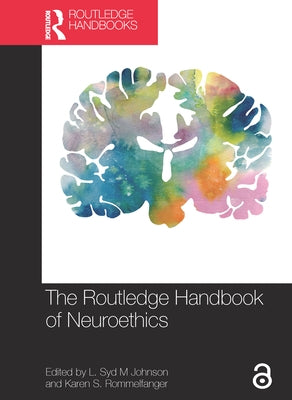
The Routledge Handbook of Neuroethics offers the reader an informed view of how the brain sciences are being used to approach, understand, and reinvigorate traditional philosophical questions, as well as how those questions, with the grounding influence of neuroscience, are being revisited beyond clinical and research domains. It also examines how contemporary neuroscience research might ultimately impact our understanding of relationships, flourishing, and human nature. Written by 61 key scholars and fresh voices, the Handbook's easy-to-follow chapters appear here for the first time in print and represent the wide range of viewpoints in neuroethics. The volume spotlights new technologies and historical articulations of key problems, issues, and concepts and includes cross-referencing between chapters to highlight the complex interactions of concepts and ideas within neuroethics. These features enhance the Handbook's utility by providing readers with a contextual map for different approaches to issues and a guide to further avenues of interest.
Chapter 11 of this book is freely available as a downloadable Open Access PDF under a Creative Commons Attribution-Non Commercial-No Derivatives 3.0 license. https: //www.routledgehandbooks.com/doi/10.4324/9781315708652.ch11
Author: L. Syd M. Johnson
ISBN-10: 0367573377
ISBN-13: 9780367573379
Publisher: Routledge
Language: English
Published: 06/30/2020
Pages: 530
Format: Paperback
Weight: 1.94lbs
Size: 9.60h x 6.90w x 1.30d
L. Syd M Johnson is Associate Professor of Philosophy and Bioethics in the departments of Humanities and Kinesiology and Integrative Physiology at Michigan Technological University. Her current research focuses on ethical and epistemological issues in disorders of consciousness and sport-related neurotrauma.
Karen S. Rommelfanger is an Assistant Professor in the departments of Neurology and Psychiatry and Behavioral Sciences, the Neuroethics Program Director at Emory University's Center for Ethics, and Neuroscience Editor-in-Residence at the American Journal of Bioethics Neuroscience. A neuroscientist and ethicist, her current research explores how evolving neuroscience and neurotechnologies challenge societal definitions of disease and medicine. She is a member of the Neuroethics Division of the NIH BRAIN Initiative.
Thanks for subscribing!
This email has been registered!
Take 20% off your first order
Enter the code below at checkout to get 20% off your first order