




Before you leave...
Take 20% off your first order
20% off
Enter the code below at checkout to get 20% off your first order

Discover summer reading lists for all ages & interests!
Find Your Next Read
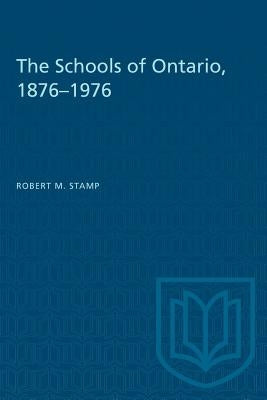
In the late nineteenth and throughout much of the twentieth century, the image of Ontario education has been one of extreme centralization and of a supposedly superior system. This study presents both the illusion and the reality, documenting the accomplishments and shortcomings of a massive provincial educational enterprise that sought to balance the perceived needs of its juvenile clients with those of the wider adult society.
Following Egerton Ryerson's retirement as Chief Superintendent of Schools of 1876, Ontario's elementary and secondary schools were controlled at the local level by school-boards and boards of education, and at the provincial level by a Department of Education (later Ministry of Education) headed by a cabinet minister. Within such a political environment, educational decisions were influenced continually by what was regarded as appropriate policy as both the community and provincial levels. Public policies, in turn, were shaped by a combination of economic, social, and cultural influences and occasionally by the outlook and determination of individual policy makers.
While the image grew of centralization, with all-powerful ministers of education and departmental officials controlling both provincial and local developments from their offices in Queen's Park, in reality a strong resevoir of community power shaped local and even provincial action for the full century of Ryerson's retirement.
On questions of pedagogy, curriculum, and educational programs, Robert Stamp takes an ideological position emphasizing the periods of innovation that challenged traditional class-room approaches, including the New Education reforms of 1890-1910, the progressivist thrust of the 1937 Ontario curriculum, and the Hall-Dennis Report of 1968.
The comprehensive study of the post-Ryerson period in Ontario education will be of importance and interest to historians, educators, and educational administrators.
Thanks for subscribing!
This email has been registered!
Take 20% off your first order
Enter the code below at checkout to get 20% off your first order