




Before you leave...
Take 20% off your first order
20% off
Enter the code below at checkout to get 20% off your first order

Discover summer reading lists for all ages & interests!
Find Your Next Read
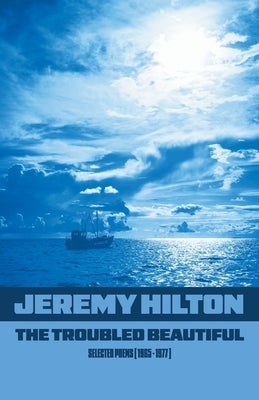
This volume brings more than a decade of Jeremy Hilton's early work back into public view and enables his achievement to take its place alongside friends and fellow travellers such as Ulli Freer, Chris Torrance, Douglas Oliver and Peter Riley. These poems are fascinated by movement - whether it be of the natural world, particularly bird life, of mechanical means, or the emotional motion of the 'geometry of friendship.' With the ethical heart and mind of a professional social worker, these are poems lived out in the open, amongst humans and nature, and in dialogue with mountains (Yr Wyddfa) and places as well as books and paintings (Freer, Olson, Hesse, Melville, Schiele), alert to their vitality as much as 'the start of their unworlding'. This volume covers a very great distance indeed and will leave a reader invigorated and changed by 'language so alive / it boggles me.'
Scott Thurston
Study of the classic era of modern British poetry, the one running from around 1966 to around 1980, has been re-animated, not just by a delve into the small press archive, but by the appearance of texts which were never published at the time: for example by Iain Sinclair (Red Eye), Jeremy Reed, John Hartley Williams, Colin Simms. Now, we have the opportunity to see extensive work by Jeremy Hilton, including four long poems, which was not published at that time. It is hard to recover why this work was not printed, but here it is.
Andrew Duncan
In these early poems by Jeremy Hilton, a modernist pilgrim of plainsong, a poet of the seascape, landscape, heartscape, and spellbinder of the night sky. As the wonderous wanderer scales mountain and moor, bog and cairn-side mountain scree, with poems now dislocated from their small-press 'Samizdat' origins, poetical trends, historical fact, social history, or context. Or, only in Time itself. We, too, as readers and listeners, become objective outliers to their raw emotions. In the Troubled Beautiful there are poems exploring the troubling ontological self in the trap of loneliness - the walker, the isolationist, the onlooker, the binoculared birder, the scouring scanner, the male gaze, 'a shy lurker' in 'visibility very poor' ... there is the lauded damage, released by the lost, the lost trawlermen and their widows, the night time yeller or caller with omens that could be read with duplicity, the shoe-gazer in fictions of liminal places long gone, the dreams lost by our unfettered capitalism. What if you held a protest and no one came? Yet these poems flow in simpler dark places, and as way-markers to some of Hilton's later poems. No point in reciting the list of major issues we all face; perhaps these are too dangerous poems to be unearthed in such dangerous times ...
Chris Ozzard
Thanks for subscribing!
This email has been registered!
Take 20% off your first order
Enter the code below at checkout to get 20% off your first order