
![Spider-Men: Worlds Collide [Marvel Premier Collection] by Bendis, Brian Michael](http://www.whiterainbookhouse.com/cdn/shop/files/img_2d0d0a87-9d07-4ffd-84f2-c4b241596800_533x.jpg?v=1762317878)




Before you leave...
Take 20% off your first order
20% off
Enter the code below at checkout to get 20% off your first order

Discover summer reading lists for all ages & interests!
Find Your Next Read
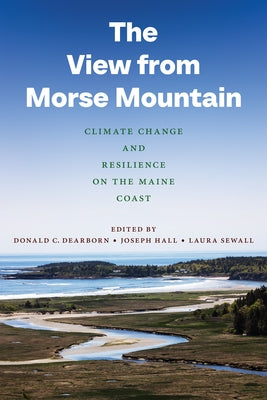
Arguing that resilient coasts emerge from collaborative, cross-disciplinary understanding rather than single-issue solutions
At the Bates-Morse Mountain Conservation Area, climate change impacts are visible to the attentive observer. High tides increasingly flood the causeway across the Sprague River Salt Marsh, large winter storms are reshaping the sand dunes at Seawall Beach, and the offshore waters of the Gulf of Maine are among the fastest-warming on the planet. Environmental change is not new there, nor is the impact of human activity, but different parts of this coastal system are changing at different rates, in different ways. Some components are potentially self-renewing, such as the barrier dune beach, while others, such as Piping Plover populations or the salt marshes, might be restored only with assistance. Unfortunately, other components may already be beyond help: the forest of pitch pines between the dunes and the marsh faces the dual threat of saltwater intrusion below ground and potential burial by migrating sands above.
In The View from Morse Mountain, contributors invite readers into this system through an array of complementary inquiries into bedrock geology, carbon capture by salt marshes, dune movement, the physiology of trees, bird migration, perceptual psychology, and the overlays of Indigenous history and colonial settlement. Fostering adaptability, particularly in coastal systems, requires just such an integrated set of examinations and perspectives. This collection of expert analyses works to encourage place-based curiosity in anyone, both those familiar with this area of Maine and people beyond, helping them recognize both loss and resilience, and to deepen their love for the places they treasure.
Contributors include the volume editors as well as Emily Chandler, Caitlin Cleaver, Isobel Curtis, J. Dykstra Eusden Jr., Brett Huggett, Bev Johnson, Dana Oster, Mike Retelle, and Robert Strong.
DONALD C. DEARBORN is Professor of Biology and Associate Dean of the Faculty at Bates College, and he serves as Senior Editor of the journal Ornithology. His research on ecology and conservation biology has a strong place-based component, with projects rooted in an array of landscapes such as Gulf of Maine islands, urban greenspaces in Jerusalem, Hawaiian coral atolls, the Texas Hill Country, and oak-hickory forests of the American Midwest. His study of wild bird populations sometimes conveniently intersects with his love of trail running and other outdoor recreation.
JOSEPH HALLis an Associate Professor of History at Bates College, where he teaches colonial North American history, environmental history, and Native American history. His scholarship considers the continuing history of the Wabanaki nations of what is now northern New England and the Canadian Maritime Provinces. His recent work focuses on Wabanaki place names, including digital mapping projects of Wabanaki history in central Maine.
LAURA SEWALLis the Director Emerita of the Bates-Morse Mountain Conservation Area. Sewall earned her doctorate in visual psychology from Brown University and is the author of Sight and Sensibility: The Ecopsychology of Perception and numerous articles on the interface between human perception and the natural world. She has served on the editorial boards for the Journal of Natural History Education and Experience, and the Journal of Ecopsychology. Laura is a founding member of the Northeastern Coastal Stations Alliance. She has taught at Prescott and Bates colleges and lives within a stone's throw of the Bates-Morse Mountain Conservation Area. Laura also holds a Master's degree in Environmental Law from Vermont Law and Graduate School.
Thanks for subscribing!
This email has been registered!
Take 20% off your first order
Enter the code below at checkout to get 20% off your first order