





Before you leave...
Take 20% off your first order
20% off
Enter the code below at checkout to get 20% off your first order

Discover summer reading lists for all ages & interests!
Find Your Next Read
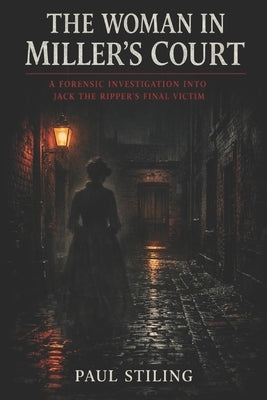
The name was invented by a journalist. The theatrical, taunting letters were almost certainly fabricated. The suspects that have filled a century of books - the royal physician, the Polish barber, the dissolute barrister - rest on rumour, retrospective gossip, and wishful thinking dressed up as evidence.
The actual evidence points somewhere else entirely.
The Woman in Miller's Court is a forensic investigation into the five canonical Whitechapel murders of 1888 - and in particular into the final, most extreme murder of all: Mary Jane Kelly, found in Room 13, Miller's Court, Spitalfields, on the morning of 9 November. Working from primary sources - Metropolitan Police files, coroner's inquest transcripts, post-mortem reports, and contemporary newspaper accounts - this book examines what we actually know, what we think we know, and what we have invented in 135 years of myth-making.
At the centre of the investigation is Charles Allen Lechmere - a Whitechapel carman who discovered the body of the first canonical victim, gave a false name at the inquest, and whose daily route placed him in the heart of the murder district at the precise hours each murder was committed. The Lechmere theory is the most evidentially grounded Ripper suspect case ever produced. This is its first serious book-length treatment.
But this book is equally about the women. Mary Ann Nichols, who had fourpence in her pocket and nowhere to sleep on the night she died. Annie Chapman, who sold flowers and did crochet work to survive, and who left her lodging house at 1:45 in the morning to earn her bed money. Elizabeth Stride, whose stories about her own past were probably fictions but who was remembered as warm and funny by those who knew her. Catherine Eddowes, released drunk from a police cell at midnight and dead within the hour, who gave the desk sergeant a false name - "Mary Ann Kelly" - for reasons no one has ever been able to explain. Mary Jane Kelly, who at midnight on the last night of her life sang a sentimental ballad about a mother's grave in a locked room in the worst street in London, and was gone before morning.
These women were not interchangeable victims in a horror story. They were people, shaped by the specific social and economic forces of late Victorian Britain - forces that made them vulnerable in precise and documentable ways, and that the world of 1888 chose, repeatedly, not to see. Their poverty was not atmosphere. It was the condition that put them on the street. It was what the killer used against them.
For 135 years they have been the supporting cast in someone else's story. This book puts them back at the centre.
Inside:
The Woman in Miller's Court does not claim to solve the Ripper murders. It does something rarer: it examines the evidence honestly, labels inference as inference, and reaches conclusions proportioned to what the record actually supports.
For readers of Philip Sugden, Hallie Rubenhold, and anyone who has ever wanted a Ripper book that takes the evidence seriously.
Thanks for subscribing!
This email has been registered!
Take 20% off your first order
Enter the code below at checkout to get 20% off your first order